

It’s probably the first question that crosses your mind before committing to dental implants: “Will they actually last?”
The short answer is yes — dental implants are the longest-lasting tooth replacement option available today. A well-placed implant, properly cared for, can last 25 years or more. Many patients keep theirs for a lifetime.
But there’s more to the story. A dental implant isn’t a single piece — it’s a system made up of three components, and each one has a different lifespan. Understanding how these parts work together, and what you can do to protect them, is the key to getting the most out of your investment.
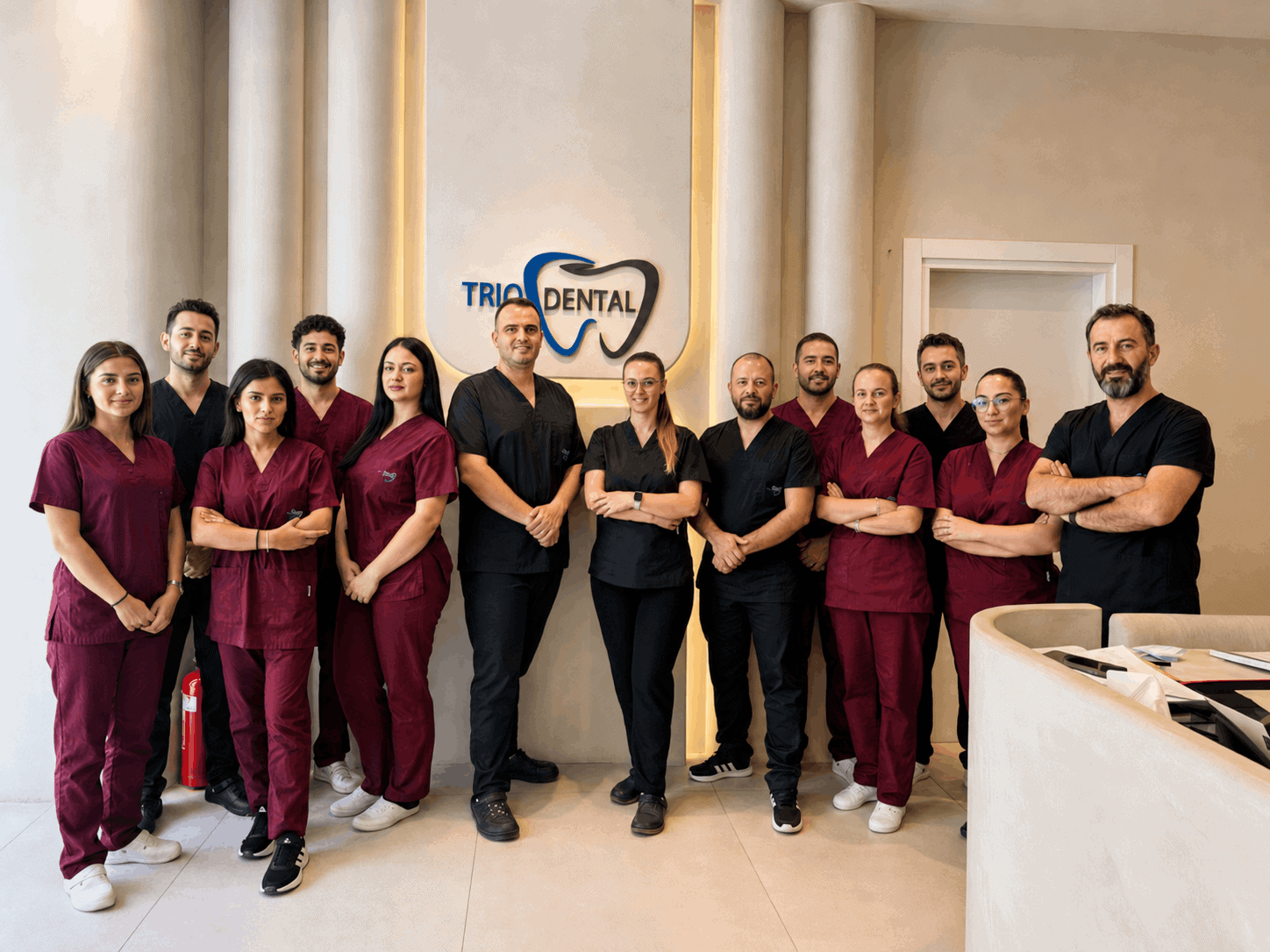
At Trio Dental Center in Tirana, Albania, our implantologist Dr. Elian Dylgjeri has placed over 2,000 implants since 2013. In this guide, we’ll share exactly what our patients need to know — backed by clinical experience and real results.
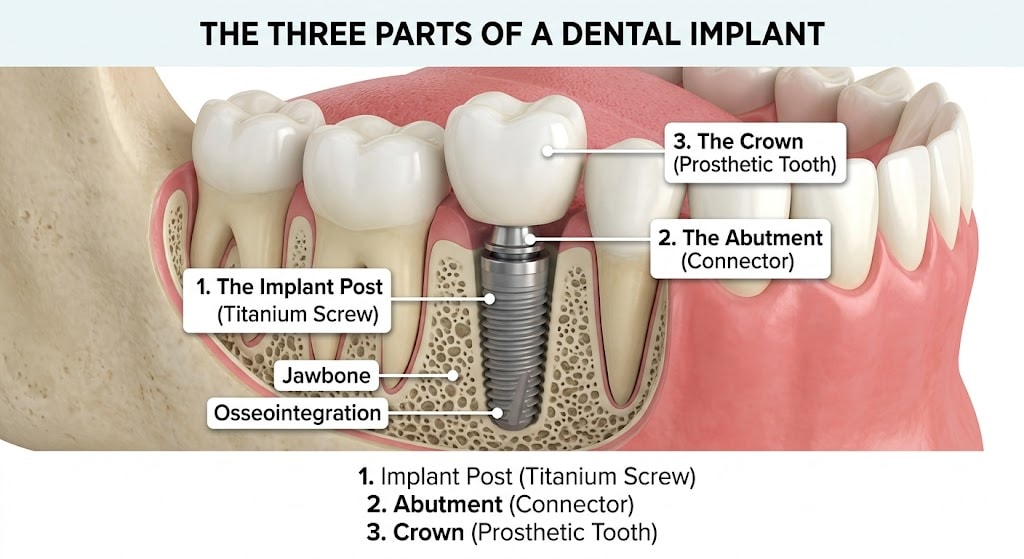
The Three Parts of a Dental Implant
To understand how long dental implants last, you first need to know what you’re actually getting. A dental implant consists of three components:
1. The Implant Post (Titanium Screw)
This is the foundation — a small titanium post that’s surgically placed into your jawbone. Over time, the bone fuses around it through a natural process called osseointegration, essentially making the post a permanent part of your jaw.
Expected lifespan: 25+ years, often a lifetime.
The implant post is designed to be permanent. Titanium is biocompatible, meaning your body accepts it without rejection. Once fully integrated, this post becomes as stable as a natural tooth root.
2. The Abutment (Connector)
The abutment is the small connector piece that sits on top of the implant post and holds the crown in place. It’s a simple but essential piece of the puzzle.
Expected lifespan: 15–20 years.
Abutments can loosen or wear over time, but replacing one is a straightforward procedure that doesn’t require surgery.
3. The Crown (Prosthetic Tooth)
This is the visible part — the tooth you see when you smile. Crowns are typically made from porcelain, zirconia, or E-Max ceramic. They’re custom-made to match the color, shape, and size of your natural teeth.
Expected lifespan: 10–15 years, sometimes longer.
The crown handles all the daily wear and tear — chewing, biting, temperature changes — so it’s the component most likely to need replacement over your lifetime. The good news? Replacing a crown is far simpler and cheaper than the original implant procedure.
What Does the Research Say?
The clinical evidence on dental implant longevity is encouraging. Studies consistently show success rates above 95% at the 10-year mark. Research published in peer-reviewed journals has reported that around 94% of implants are still functional after 15 years, and many patients retain their original implant posts for 20–30 years with no complications.
The real differentiator between an implant that lasts 10 years and one that lasts a lifetime comes down to three things: the quality of the original placement, the materials used, and the patient’s ongoing care.

7 Factors That Affect How Long Your Implants Last
1. The Skill of Your Dentist
This is the single most important factor. A precisely placed implant — positioned at the correct angle, depth, and location — integrates better with the bone and is less likely to develop complications.
At Trio Dental Center, we use computer-guided implantology and 3D CBCT scanning to plan every implant surgery with millimeter-level precision. This technology eliminates guesswork, reduces surgical time, and leads to more predictable long-term outcomes.
2. Implant Brand and Material Quality
Not all implants are created equal. Premium implant systems from established manufacturers have decades of clinical research behind them and consistently deliver higher success rates than cheaper alternatives.
Always ask your clinic which brand of implant they use, and request the certificate of authenticity. If a clinic won’t tell you the brand, consider that a red flag.
3. Oral Hygiene
This is the factor you control the most — and it matters more than most patients realize.
Dental implants themselves can’t get cavities. But the gum and bone tissue around them absolutely can become infected. A condition called peri-implantitis — essentially gum disease around an implant — is the leading cause of implant failure after successful placement.
The prevention is simple: brush twice daily, floss every day (especially around the implant), and keep up with professional cleanings.
4. Smoking
Smoking is one of the biggest threats to dental implant longevity. It restricts blood flow to the gums, which slows healing after surgery and weakens the bone-implant bond over time. Research indicates that implant failure rates are roughly double for smokers compared to non-smokers.
If you’re planning to get implants, quitting smoking — or at least stopping in the weeks surrounding your surgery — can dramatically improve your chances of long-term success.
5. Teeth Grinding (Bruxism)
If you grind or clench your teeth — especially at night — the constant pressure can wear down your crown, loosen the abutment, and even compromise the implant post over time.
The solution is straightforward: a custom-made night guard. This simple device distributes the pressure evenly and protects both your implants and natural teeth while you sleep.
6. Overall Health
Certain medical conditions can affect implant longevity. Conditions that impact bone health — such as osteoporosis, uncontrolled diabetes, or autoimmune disorders — may slow healing or reduce the strength of the implant-bone bond.
This doesn’t mean you can’t get implants if you have a health condition. It means your dentist needs to know your full medical history so they can plan accordingly. At Trio Dental, we evaluate every patient’s health profile before recommending treatment.
7. Location in the Mouth
Implants in the back of the mouth (molars) handle significantly more chewing force than those in the front. As a result, crowns on back teeth tend to wear out slightly faster. This is normal and expected — it just means your molar crown might need replacement a year or two sooner than a front-tooth crown.
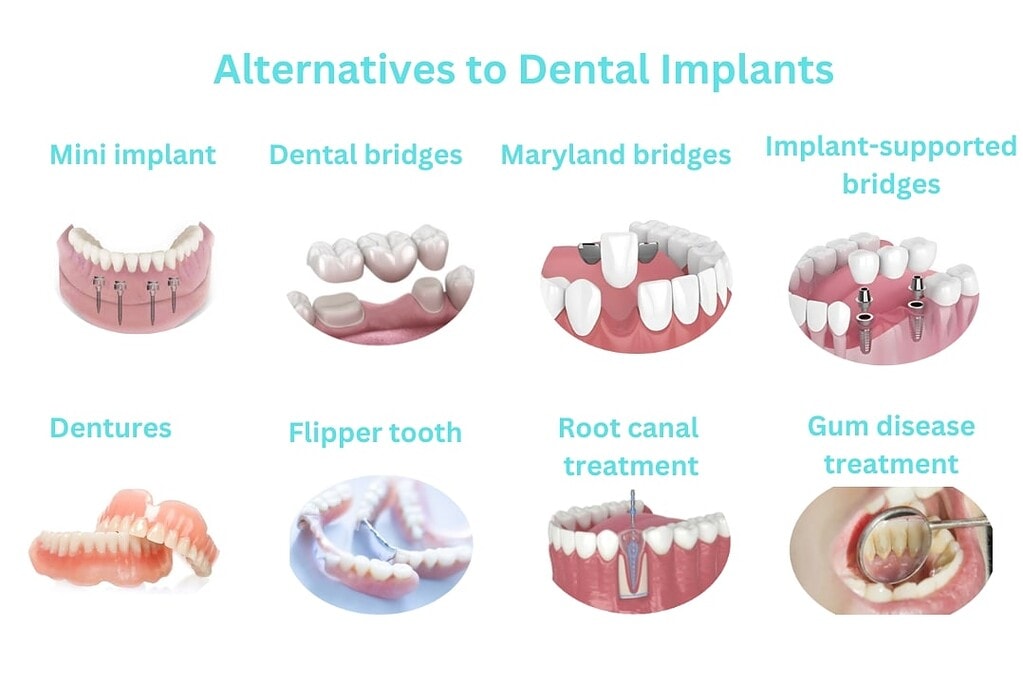
Dental Implants vs Other Tooth Replacement Options
One of the strongest arguments for implants is how they compare to the alternatives:
| Option | Average Lifespan | Key Limitation |
|---|---|---|
| Dental implants | 15–25+ years (post can last a lifetime) | Crown may need replacement every 10–15 years |
| Dental bridges | 10–15 years | Require grinding down healthy neighboring teeth |
| Dentures | 5–7 years | Can slip, feel uncomfortable, and cause bone loss |
Implants are the only tooth replacement that preserves your jawbone. When you lose a tooth, the bone beneath it begins to shrink because it no longer receives stimulation from a root. Dentures and bridges sit above the bone and do nothing to prevent this. An implant post, because it’s embedded in the jaw, mimics the function of a natural root and keeps the bone healthy.
This bone preservation is one reason why implants last so much longer — they protect the very foundation they’re built on.
How to Make Your Dental Implants Last as Long as Possible
The good news is that most of the factors affecting implant longevity are within your control. Here’s what we recommend to every patient at Trio Dental Center:
Daily care: Brush your teeth at least twice a day, including around your implants. Use a soft-bristled brush and non-abrasive toothpaste. Floss daily — a water flosser or interdental brush can be especially helpful for cleaning around implant posts.
Regular dental visits: See your dentist for professional cleanings and check-ups at least twice a year. These visits catch potential issues — like early-stage peri-implantitis — before they become serious problems.
Protect against grinding: If you clench or grind, get fitted for a night guard. This simple step can add years to your crown’s lifespan.
Quit smoking: If you smoke, this is one more reason to stop. The impact on implant survival is well-documented, and quitting at any stage helps.
Eat smart: Avoid chewing on ice, hard candy, pen caps, or other non-food items. These habits create unnecessary stress on your crowns.
Stay healthy: Take care of your overall health. Bone-supporting nutrients like calcium and vitamin D contribute to the long-term stability of your implants.
What Happens If Something Goes Wrong?
Even with the best care, issues can occasionally arise. Here’s what to watch for:
- A loose or wobbly feeling in the implant
- Pain or discomfort when chewing
- Redness, swelling, or bleeding around the implant
- Pus or discharge near the gum line
If you notice any of these signs, contact your dentist promptly. Early intervention is almost always successful — most complications are easily resolved when caught early.
At Trio Dental Center, international patients can reach our team via WhatsApp or video call for post-treatment consultations. If an in-person visit is needed, we’ll coordinate it around your schedule.
Why Trio Dental Center for Your Implants?
When you’re investing in something that’s meant to last a lifetime, you want to know it’s being done right. Here’s what sets Trio Dental apart:
- Over 2,000 implants placed by Dr. Elian Dylgjeri since 2013
- Computer-guided surgery for precision placement
- In-house dental laboratory for fast, high-quality prosthetics
- 3D CBCT scanning included in every treatment plan
- Premium European-manufactured implants with full certification
- Comprehensive warranty on all implant work
- 3,000+ patients treated annually from across Europe
We don’t just place implants — we build long-term relationships with our patients. Many come back for additional treatments, and many more refer their friends and family.
Frequently Asked Questions
Can dental implants last forever?
The titanium implant post is designed to be permanent and can last a lifetime with proper care. The crown typically needs replacement every 10–15 years due to normal wear.
What’s the success rate of dental implants?
Clinical studies consistently show success rates of 95–98% at the 10-year mark. With good oral hygiene and regular check-ups, the vast majority of implants last far longer.
Are dental implants worth the cost?
Compared to alternatives like bridges and dentures — which need replacement every 5–15 years — implants are usually the most cost-effective choice over a lifetime.
Do dental implants require special cleaning?
No special products are required. Regular brushing, flossing, and professional cleanings are sufficient. A water flosser or interdental brush can make cleaning around implants easier.
Can I get implants if I have bone loss?
Yes. Procedures like bone grafting and sinus lifts can rebuild bone to support implants. At Trio Dental Center, we routinely perform these procedures with excellent results.
How soon after getting an implant can I eat normally?
After the initial healing period (a few days), you can eat soft foods comfortably. Full chewing function is typically restored once the final crown is placed, usually 3–6 months after surgery.
Ready to Invest in a Smile That Lasts?
Dental implants are the closest thing modern dentistry offers to getting your natural teeth back. And when they’re placed by an experienced team using premium materials, they can last you a lifetime.
At Trio Dental Center, we combine advanced technology, skilled specialists, and genuine patient care to deliver implants that stand the test of time — at prices that make world-class dentistry accessible.
Get your free estimate today. Send us your panoramic X-ray via WhatsApp, and we’ll provide a complete treatment plan — no cost, no obligation.


 English
  Shqip
Shqip  Italiano
  Français
  Español