
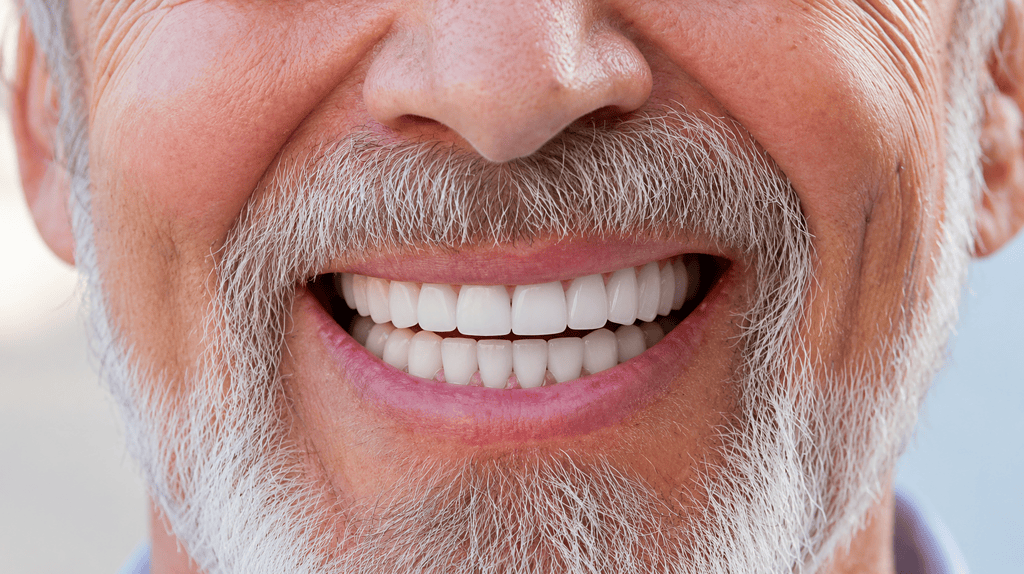
All-on-4 before and after results are often shown through photographs. These images can demonstrate a clear change in the teeth, but they do not explain the complete effect of treatment.
For suitable patients, All-on-4 may also change chewing, speech, comfort and the experience of living with fixed teeth instead of a removable denture.
What Is All-on-4 Treatment?
All-on-4 is a full-arch implant treatment used to replace all teeth in the upper jaw, lower jaw or both jaws.
Four implants are positioned in the jaw to support a fixed bridge. The two implants at the back may be placed at an angle to use available bone more effectively.
This treatment may be considered for patients who:
- Have lost all teeth in one arch
- Wear an unstable removable denture
- Have several teeth that cannot be saved
- Want a fixed alternative to removable teeth
- Have suitable bone and general health for implant surgery
Trio Dental provides All-on-4 implant treatment in Albania and evaluates each patient before confirming whether four implants are the correct solution.
Before All-on-4: Common Daily Difficulties
Patients considering full-arch treatment often focus on missing or damaged teeth. However, the problem may affect many parts of daily life.
A removable denture may move while eating or speaking. Remaining teeth may be painful, loose or difficult to clean.
Some patients begin avoiding certain foods because they cannot bite or chew comfortably. Others chew mainly on one side, which can make eating slower and less enjoyable.
The emotional effect can also be important. Patients may cover their mouth when speaking, avoid photographs or feel uncomfortable eating with other people.
After All-on-4: A Fixed Restoration
One of the main differences after All-on-4 is that the new bridge is connected to the implants.
The patient does not remove it at home like a traditional denture. It is removed only by the dental team when professional maintenance or technical work is needed.
This can create a greater sense of stability. The restoration should not move in the same way as a loose removable denture.
However, fixed does not mean maintenance-free. The area under the bridge must still be cleaned every day.
Changes in Chewing
Improved chewing is often one of the most practical changes after full-arch implant treatment.
A stable bridge can help patients bite and process food more effectively than an unstable denture. It can also reduce the need to depend on denture adhesive.
The change is not immediate for every type of food. Patients normally follow a soft diet during early healing, especially when a temporary bridge is connected soon after surgery.
During this period, suitable foods may include:
- Soft pasta
- Eggs
- Fish
- Cooked vegetables
- Yogurt
- Soft rice
- Soup that is not very hot
- Food cut into small pieces
Hard, sticky and crunchy foods may place too much pressure on healing implants or damage the temporary restoration.
After healing and placement of the final bridge, the dentist can explain which foods can be reintroduced.
Changes in Speech
Teeth influence the way air moves when certain sounds are produced. Missing teeth, spaces and moving dentures can therefore affect speech.
A fixed bridge may make pronunciation feel more stable. However, the new teeth may initially feel different because their position, thickness or shape has changed.
The tongue needs time to adapt. Some patients notice temporary changes when pronouncing sounds such as “s,” “f” or “th.”
Small changes to the bridge may be needed when speech does not improve after the initial adjustment period.
Changes in Facial Support
A complete arch of teeth can support the lips and lower part of the face.
When teeth have been missing for a long time, the area around the mouth may appear less supported. A carefully designed bridge can help restore some of this lost support.
This does not mean All-on-4 is a facial cosmetic procedure. It cannot replace facial surgery or reverse every age-related change.
The amount of visible change depends on:
- Previous tooth loss
- Bone loss
- Lip position
- Tooth length
- Bridge design
- The relationship between the upper and lower jaws
The goal should be balanced support, not teeth that look too large or push the lips forward unnaturally.
Changes in Comfort
Comfort after All-on-4 is different from comfort with natural teeth.
The implants do not contain the same nerves as natural tooth roots. However, the gums, jaw, muscles and surrounding tissues can still feel pressure or discomfort.
After the healing period, a well-designed restoration should feel stable and allow normal daily function. Areas that trap food, press heavily against the gums or affect the bite should be reviewed.
Patients should contact the clinic when they notice:
- A loose bridge
- A broken temporary tooth
- Persistent pain
- Swelling
- Bleeding around the implants
- A sudden change in the bite
- Difficulty cleaning an area
Problems should not be ignored simply because the bridge remains fixed.
Changes in Oral Hygiene
Before treatment, some patients may struggle to clean around broken or mobile teeth. After treatment, the cleaning method changes rather than becoming unnecessary.
The patient must clean the bridge, the gum line and the space under the restoration.
Depending on the design, the dental team may recommend:
- A soft toothbrush
- Interdental brushes
- Special implant floss
- A water irrigator
- Professional cleaning appointments
Implants can develop inflammation and bone loss when plaque is not controlled. Daily hygiene and regular professional reviews remain essential after treatment.
Temporary Versus Final Teeth
Many before-and-after photographs are taken when the temporary bridge is first placed. Patients should understand that this may not be the final result.
Temporary teeth allow the dental team to evaluate:
- Tooth position
- Smile shape
- Speech
- Bite
- Cleaning access
- Lip support
- Patient feedback
The gums can also change during healing. The final bridge is normally planned after the tissues become more stable.
Patients should ask which restoration is shown in any before-and-after image. A temporary acrylic bridge and a final zirconia bridge are not the same stage of treatment.
Emotional and Social Changes
A stable set of teeth can make some patients feel more comfortable in social situations.
They may smile more freely, speak without worrying that a denture will move and feel more relaxed when eating in public.
These changes are personal. No dental treatment can guarantee a specific emotional result, but improved function and appearance may support greater confidence.
Expectations should still be realistic. The aim is a healthy, functional and suitable smile rather than a copy of another patient’s result.
What Before-and-After Photos Cannot Show
Photographs can show tooth colour, length and general smile shape. They cannot confirm whether the implants are healthy or whether the bridge is easy to clean.
They also cannot show:
- Bone condition
- Implant stability
- Bite balance
- Speech
- Comfort during eating
- Hygiene access
- Long-term maintenance
For this reason, patients should not select treatment only by looking at social media photographs.
A clinical examination and CBCT scan may be required to assess bone availability, important anatomical structures and possible implant positions.
How Trio Dental Plans All-on-4 Treatment
The process may begin with photographs and a panoramic X-ray sent online. These records help the team provide an initial opinion before the patient travels.
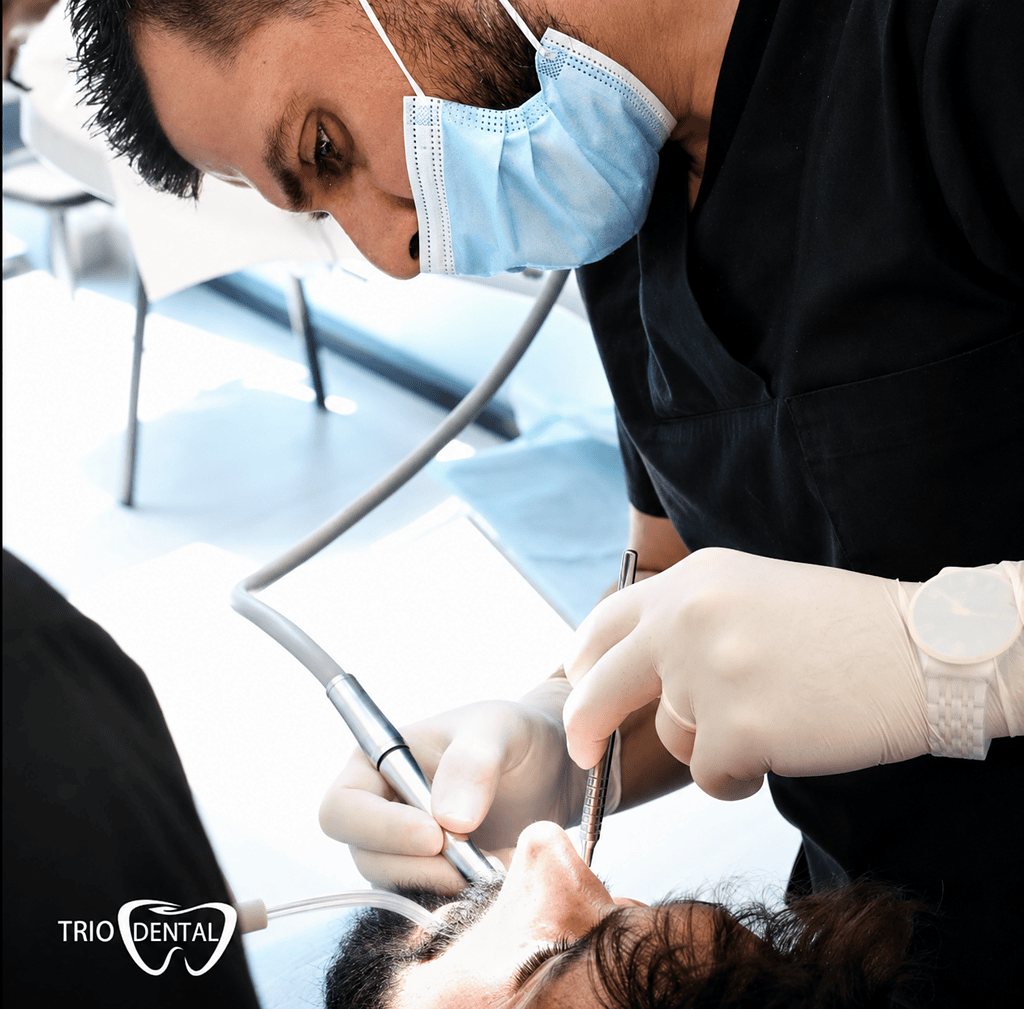
Final planning takes place after an examination in Tirana. The dentist reviews the gums, remaining teeth, bone, bite and general treatment needs.
When immediate loading is suitable, a temporary fixed restoration may be provided after implant placement. The final timeline depends on implant stability and the individual healing process.
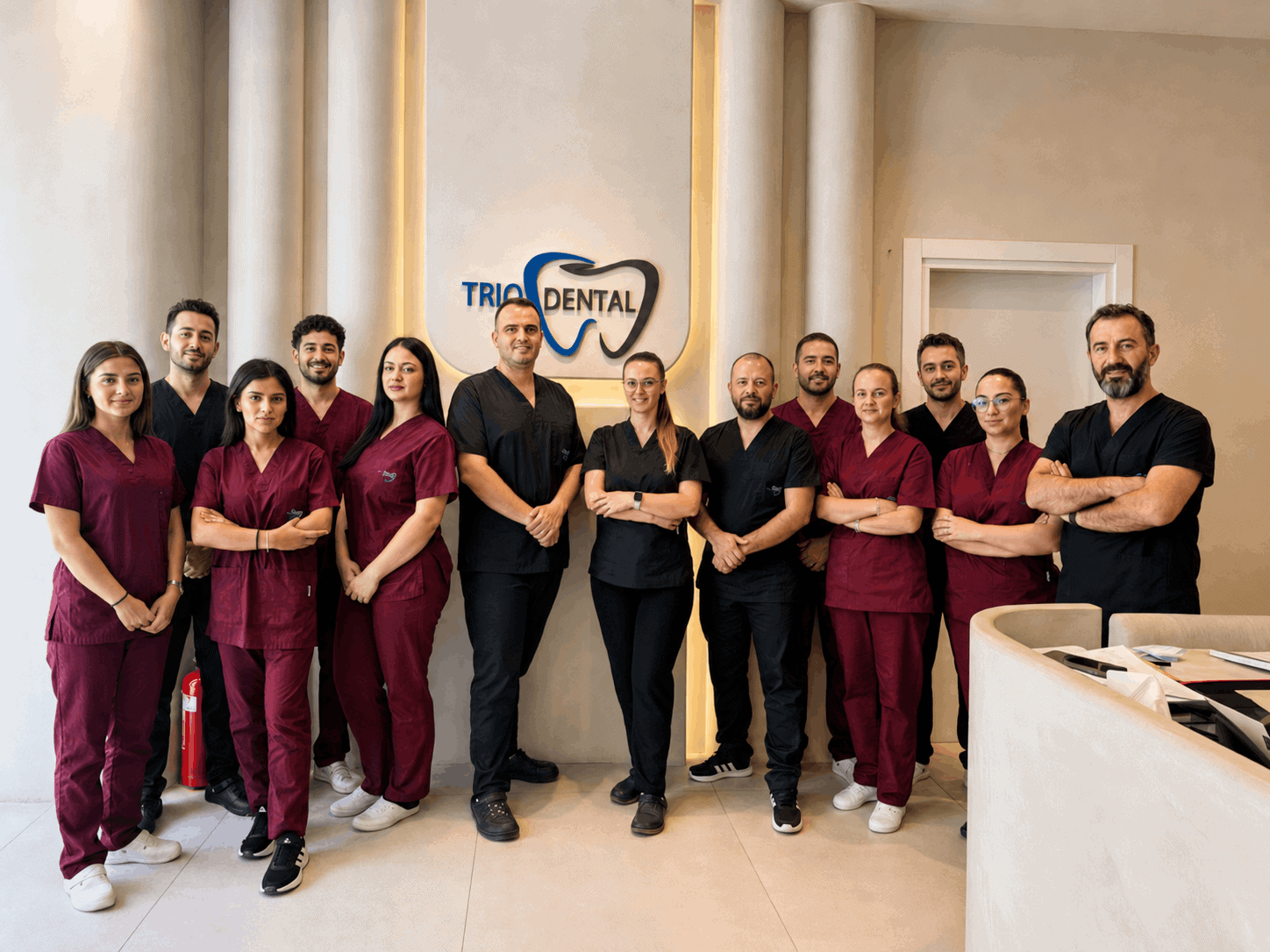
Trio Dental also has an internal dental laboratory, allowing the clinical and technical teams to coordinate the design, fitting and adjustment of the restoration within the same structure.
Plan Your Full-Arch Assessment
All-on-4 can change more than the visible appearance of the teeth. The greatest differences may be noticed while eating, speaking, cleaning and participating in everyday life.
🦷 Send your panoramic X-ray and dental photographs for an initial review.
📋 Ask whether All-on-4, All-on-6 or another treatment may be more suitable for your case.
✈️ Receive information about the treatment stages before organizing your trip to Tirana.
📞 Call or WhatsApp: +355 69 747 4695
📧 Email: info@dentaltrio.com


 English
  Shqip
Shqip  Italiano
  Français
  Español