

An old dental crown does not need replacing just because it has been in your mouth for ten or fifteen years. However, a loose fit, new discomfort or changes around the gumline can mean it needs attention. Here are six signs your dental crown may need replacing, and what to check before a small problem becomes harder to treat.
1. Your Crown Feels Loose or Moves When You Chew
A crown should stay securely in place when you eat and speak. If it rocks, clicks or shifts under pressure, the cement holding it may have weakened, or the tooth underneath may have changed.
Do not test it by pulling or repeatedly moving it. Arrange a dental appointment promptly, because a loose crown can allow food and bacteria underneath and may eventually come off.
Recementing may be possible if the crown and tooth remain healthy. However, the dentist must first establish why it became loose.
If the crown falls out, keep it in a clean container and bring it to your dentist. Never use household glue to stick it back in place.
2. You Can See a Crack, Chip or Worn Edge
Look for a new rough patch, a piece of ceramic missing or a sharp edge that catches your tongue. Even a small chip may affect comfort, and a deeper fracture can weaken the restoration.
Not every damaged crown must be replaced. A dentist might smooth a minor rough area or repair selected surface damage, while a major crack may require a new crown.
Crowns with a porcelain outer layer can sometimes chip while their underlying structure remains intact. Your dentist will check whether the damage affects the crown’s strength, appearance or ability to protect the tooth.
Until it is examined, avoid biting hard foods directly on the damaged crown.
3. The Crowned Tooth Has Started to Hurt
New sensitivity to cold, pain when biting or a persistent ache deserves attention. The cause could be decay near the crown edge, a crack in the supporting tooth, irritation inside the tooth or a problem with your bite.
Pain does not automatically mean the crown has failed, and a tooth with a previous root canal can still develop an infection. An examination and, when appropriate, an X-ray help identify what needs treating.
Seek urgent dental care for severe pain, fever or facial swelling. If swelling affects swallowing or breathing, seek emergency medical help immediately rather than planning dental travel.
4. Food Keeps Getting Trapped Around One Crown
Does food regularly catch beside a crown even though it did not before? A contact point between teeth may have changed, or the crown edge may no longer fit as well as it should.
Persistent bad taste or an unpleasant smell from the same area also deserves investigation. These changes do not prove there is decay, but bacteria and food can collect where cleaning is difficult.
Sometimes the problem comes from a neighbouring tooth rather than the crown itself. The dentist needs to examine the entire contact area and check for decay beneath the crown edge.
Depending on the findings, the solution may involve an adjustment, treatment of the affected tooth or a replacement restoration.
5. The Gum Around the Crown Bleeds or Looks Different
Redness, tenderness, bleeding while brushing or a gumline that has receded can suggest a problem around an older restoration. Sometimes plaque is the main cause; in other cases, a poorly fitting edge makes cleaning more difficult.
Do not assume replacing the crown alone will solve gum disease. The dentist should check the gums and address inflammation before deciding whether the restoration itself needs changing.
6. Your Old Crown No Longer Matches Your Smile
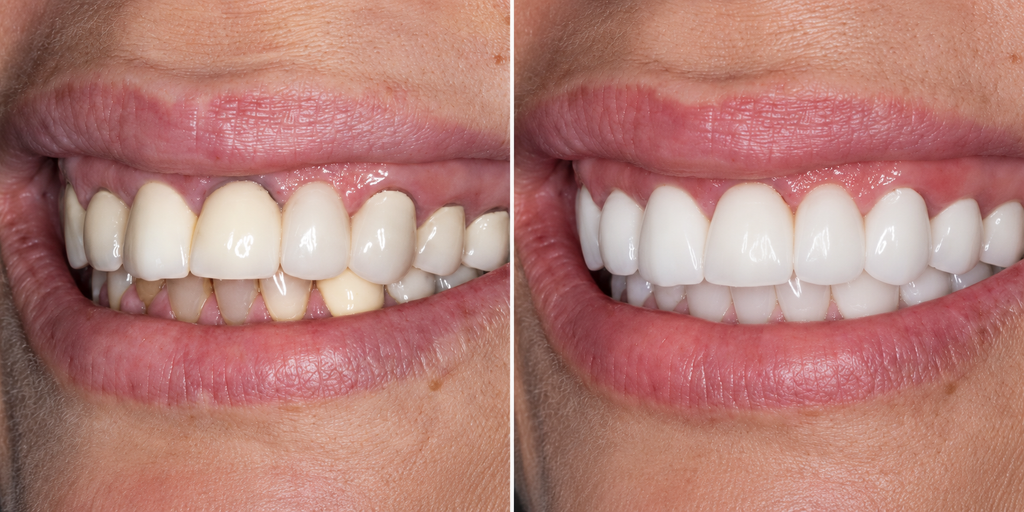
A crown may look more yellow than neighbouring teeth, or its shape may seem out of place after years of changes to your smile. This can be a reasonable reason to ask about an aesthetic replacement, even if the crown still functions well.
A grey or dark line near the gum does not always mean decay. Some older metal-ceramic crowns show a metal edge when the gum recedes; our article on dark lines around old dental crowns explains the different causes.
Whitening treatments do not change the colour of an existing ceramic crown. If you want a more balanced shade across your smile, discuss how replacement crowns would match your natural teeth.
Does Every Warning Sign Mean You Need a New Crown?
No. The purpose of the assessment is to distinguish a problem with the crown from one involving the tooth or gums underneath.
| What the dentist finds | What may happen next |
| Crown loose but sound, tooth healthy | Recementing may be possible |
| Small surface chip | Smoothing or repair may be considered |
| Decay around the edge | Treat the decay; replacement may be needed |
| Gum inflammation | Treat the gums and review crown fit |
| Large fracture or poor fit | A new crown may be recommended |
At Trio Dental Center, our prosthodontic team evaluates the remaining tooth, gum health, bite and existing restoration. We may use dental X-rays when needed, rather than deciding from a photograph alone.
If a replacement is appropriate, our zirconia and E-max crown treatments offer material choices based on the tooth’s position, appearance and chewing forces. Our own laboratory in Tirana produces crowns, with the final fit and bite checked before cementation.
Coming From Italy With Several Old Crowns?
You can send us clear photos and any recent X-rays before travelling. Tell us which crowns are uncomfortable, when they were placed and whether any were fitted after root canal treatment.
This helps us discuss the likely next steps, although the final decision requires an in-person examination. Some crowns may be worth keeping, so replacing every restoration in your mouth is not automatically necessary.
If you have severe pain or swelling while still in Italy, see a local dentist promptly instead of waiting for your trip.
FAQs About Replacing Old Dental Crowns
How many years should a dental crown last?
There is no fixed replacement deadline. Material, bite forces, cleaning and the health of the supporting tooth all affect how long a crown remains useful.
Can a dentist remove an old crown without damaging the tooth?
The dentist uses controlled techniques to remove it, sometimes cutting through the restoration. Additional treatment may be needed if the tooth underneath is already weakened or decayed.
Can a crown on an implant also need replacement?
Yes. An implant-supported crown can chip, loosen or need replacing even while the implant itself remains stable. The dentist must determine whether the problem involves the crown, its connection or the implant.
Do I always need another root canal when replacing a crown?
No. A previous root canal does not automatically need repeating when a crown is changed. Retreatment is considered only if examination or imaging identifies a relevant problem.
Can a temporary crown protect my tooth while the new one is made?
Often, yes. A temporary crown can help cover a prepared tooth while the laboratory makes the final restoration. Your dentist will explain whether one is needed and how to care for it.
✨ Renew Your Smile With Crowns at Trio Dental Center
Have an old crown that feels uncomfortable or no longer looks right? Contact Trio Dental Center to discuss a professional assessment and possible crown replacement in Tirana.
- 📧 Email: info@dentaltrio.com
- 📞 Telephone: +355 69 747 4695
- 📍 Location: River Residence, Floor 1, Tirana 1001, Albania
- 🌐 Contact us: Ask about replacing old dental crowns


 English
 Shqip
 Italiano
 Français
 Español