
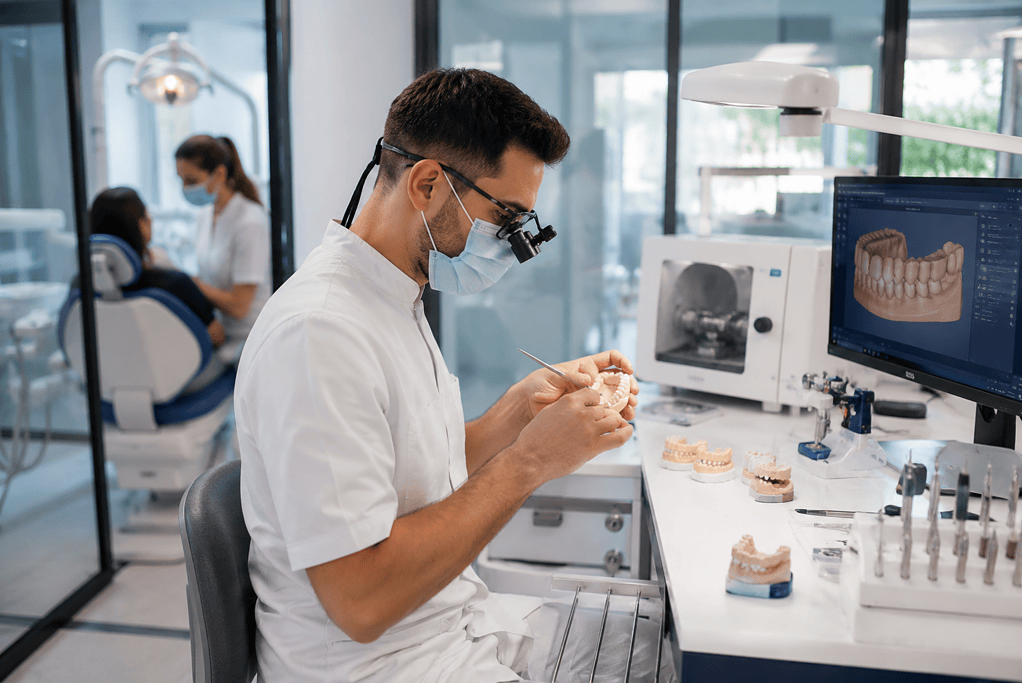
A dental clinic with an internal laboratory keeps important clinical and technical work in the same structure. Dentists and dental technicians can communicate directly while planning crowns, bridges, veneers and implant-supported restorations.
This closer cooperation can make the treatment process more efficient. It may also help improve fit, appearance and quality control before the final restoration is placed.
What Is an Internal Dental Laboratory?
A dental laboratory is where custom restorations are designed, produced and adjusted. These restorations may include:
- Dental crowns
- Dental bridges
- Veneers
- Implant crowns
- Full-arch implant restorations
- Fixed dental prostheses
- Removable dentures
- Temporary teeth
Some clinics send every case to an external laboratory. The laboratory may be located in another part of the city or even in another country.
A clinic with an internal laboratory has dental technicians working within the same structure as the clinical team. This does not mean that every procedure is completed immediately. It means that the people examining the patient and the people producing the restoration can work more closely together.
Why Communication Between the Dentist and Technician Matters
A dental restoration is not selected from a standard collection. It must be created for the patient’s teeth, gums, bite and facial appearance.
The dentist collects the clinical information. The dental technician then uses this information to create the restoration.
Important details may include:
- The condition of the prepared tooth
- The position of the dental implant
- The space available for the restoration
- The patient’s bite
- The height and shape of nearby teeth
- The colour of the natural teeth
- The position of the gums
- The patient’s aesthetic expectations
When the laboratory is outside the clinic, this information is usually sent through photographs, scans, written instructions and digital files. These methods can work well, but additional communication may be needed when something is unclear.
With an internal laboratory, the dentist and technician can discuss the case directly. The technician may also be able to see the patient’s smile, facial expressions and natural teeth in person.
This reduces the risk of important details being misunderstood.
How an Internal Laboratory Can Help Improve Fit
The fit of a restoration affects comfort, function and long-term maintenance. A crown or bridge should sit correctly on the prepared tooth or implant without creating unnecessary pressure.
It must also meet the nearby teeth correctly. If the contact is too loose, food may become trapped. If it is too tight, the restoration may be difficult to place or may create discomfort.
The bite must also be checked. A restoration that is slightly too high can feel uncomfortable when the patient closes the mouth or chews.
Creating a better fit normally includes several stages:
- The dentist examines and prepares the treatment area.
- A digital scan or traditional impression records its shape.
- The bite and nearby teeth are recorded.
- The technician designs the restoration.
- The restoration is produced in the chosen material.
- The dentist checks it inside the mouth.
- Small corrections are made when necessary.
- The restoration is polished and placed.
An internal laboratory can make the correction stage more direct. The dentist can explain exactly where an adjustment is required, while the technician can respond without waiting for the case to be transported between different locations.
However, an internal laboratory does not automatically guarantee a perfect fit. Accuracy still depends on careful preparation, reliable scans or impressions, correct design, suitable equipment and detailed clinical checks.
Faster Treatment Without Skipping Important Steps
Speed is particularly important for patients who travel for dental treatment. They may have a limited number of days available before returning home.
An external laboratory usually needs time to receive the case, review it, produce the restoration and send it back to the clinic. If an adjustment is needed, the restoration may have to be returned again.
An internal laboratory can reduce some of this waiting time. Digital files, instructions and corrections can move directly between the dentist and technician.
This may help with:
- Producing temporary restorations
- Reviewing a digital design
- Correcting the shape of a crown
- Changing the contact between teeth
- Adjusting the bite
- Improving the shade
- Polishing the restoration
- Completing final checks
Faster treatment should never mean rushed treatment. The condition of the teeth, gums and bone still determines the correct timeline.
For example, dental implants often require a healing period before the final restoration can be fitted. Gum treatment, tooth extractions or rigjenerim kockor may also require additional time.
The laboratory can improve the technical workflow, but it cannot replace the biological healing process.
Internal Laboratory Versus External Laboratory
Both internal and external laboratories can produce high-quality dental restorations. The main difference is how the clinical and technical teams communicate and manage adjustments.
| Treatment Factor | External Laboratory | Internal Laboratory |
| Communication | Usually through files, photographs and written instructions | Direct communication between dentist and technician |
| Transportation | The restoration may need to be transported | Work remains within the same structure |
| Small adjustments | May require sending the restoration back | Can often be discussed and completed more directly |
| Shade evaluation | Usually based on photographs and shade records | The technician may evaluate the patient in person |
| Treatment timing | Depends partly on the external laboratory schedule | The clinic has greater control over the workflow |
| Quality checks | Shared between two separate businesses | Clinical and technical checks can be coordinated closely |
| Complex cases | Additional communication may be required | Dentist and technician can review the case together |
Why This Matters for International Patients
Dental tourists often need more extensive treatment than patients attending for a simple filling. They may need several crowns, dental implants, bridges or a complete rehabilitation.
They also have a fixed travel schedule. Unexpected laboratory delays may affect accommodation, flights and the return home.
An internal laboratory may make the process easier to organize because the clinic has more direct control over production and adjustments. The patient does not need to visit a separate laboratory or coordinate between different providers.
This can be helpful when:
- A temporary restoration needs modification
- The shade must be reviewed
- A trial fitting requires changes
- The bite needs a small correction
- The final restoration must be polished
- Several restorations need to be completed together
Patients should still leave enough time for examinations, trial fittings and final checks. Booking the return flight too close to the final appointment can create unnecessary pressure.
A clear treatment plan should explain how many visits are needed, how long each phase may take and whether a second trip is required.
Trio Dental Clinic’s Internal Laboratory
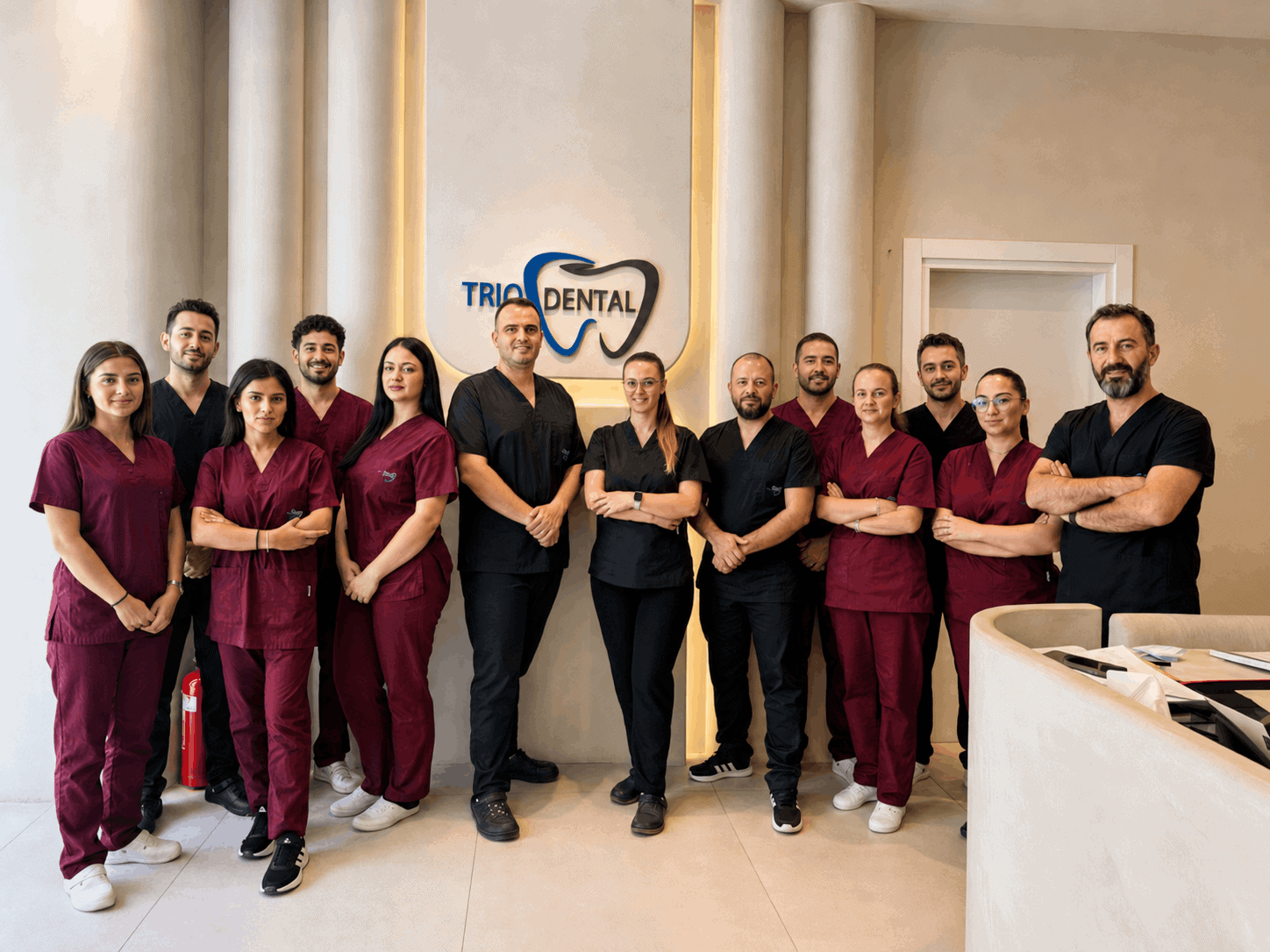
Trio Dental combines clinical dental care with an internal laboratory in Tirana. This allows the dentists and laboratory team to coordinate restorations such as zirconia crowns, E-Max crowns, bridges and implant-supported teeth within the same structure.
For patients receiving several restorations, close cooperation can help create greater consistency across the smile. Shape, shade, bite and fit can be reviewed as parts of one treatment plan.
The internal laboratory is also useful for international patients with a limited stay in Albania. When a technical adjustment is required, communication can happen directly between the clinical and laboratory teams.
The final treatment timeline will always depend on the patient’s oral health and the procedures required. A complete examination is necessary before confirming what can be completed during one visit.
Plan Your Dental Treatment With Trio Dental Clinic
A successful restoration should not only look attractive. It should fit correctly, feel comfortable and support normal daily function.
🦷 Send Trio Dental your dental photographs or panoramic X-ray for an initial assessment.
💬 Ask about crowns, bridges, veneers, dental implants or full-mouth restoration.
✈️ Receive information about the treatment stages before planning your trip to Tirana.
📞 Call or WhatsApp: +355 69 747 4695
📧 Email: info@dentaltrio.com
Contact Trio Dental to learn how an internal clinical and laboratory workflow can support a more organized dental treatment experience.


 English
  Shqip
Shqip  Italiano
  Français
  Español