

Being told you have too little jawbone for implants can sound like the end of your treatment options. But dental implants in Albania may still be possible with bone loss, using a bone graft, a sinus lift or an implant arrangement that makes better use of the bone you have. The right approach starts with finding out exactly where bone is missing.
First, Find Out Where the Bone Is Missing
Your jawbone supports natural teeth and provides the foundation for dental implants. After a tooth is lost, the surrounding bone can gradually shrink; gum disease and previous infections can also contribute to bone loss.
The location of that loss matters as much as the amount. A narrow ridge at the front of your mouth creates a different challenge from limited bone beneath the sinus at the back of your upper jaw.
At Trio Dental Center, we use 3D dental CT imaging (CBCT) to examine bone height and width and identify structures such as nerves and sinuses. A panoramic X-ray can help with an initial review, but it cannot provide all the measurements needed for implant surgery.
Option 1: Bone Grafting to Rebuild Support
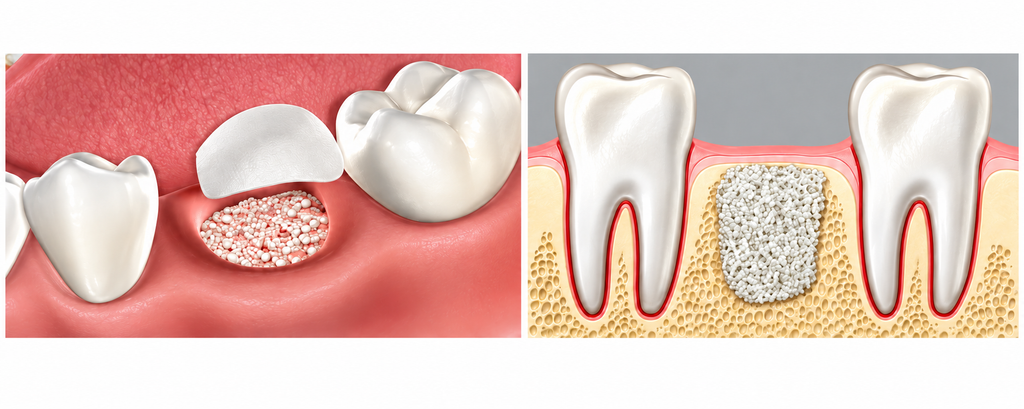
A dental bone graft helps rebuild an area where the jaw is too thin or has lost volume. The graft material provides a framework for new bone to develop, sometimes with a protective membrane over the area.
This may be useful when the planned implant needs more bone around its sides or when a missing tooth has left a narrow ridge. The size and shape of the defect help determine the grafting technique.
A small graft may be placed alongside an implant if the surgeon can achieve enough initial stability. Larger defects may need grafting first, followed by healing before implant placement. Grafting is an additional operation, and infection, incomplete healing or a need for further treatment are possible.
Option 2: A Sinus Lift for Upper Back Teeth
There is a hollow air space called the maxillary sinus above the upper back teeth. When the bone beneath it is too shallow, a sinus lift may create additional height for an implant.
During this procedure, the surgeon carefully raises the sinus lining and may place graft material underneath. The approach depends on the available bone and sinus health, including the risk of injury to the sinus lining.
At our clinic, sinus lifts are among the treatments carried out by our implant surgeons, including Dr. Elian Dylgjeri and Dr. Julian Kokuja. A sinus lift is a solution for a particular part of the upper jaw, not for every type of bone loss.
Option 3: All-on-4 May Use the Bone You Still Have
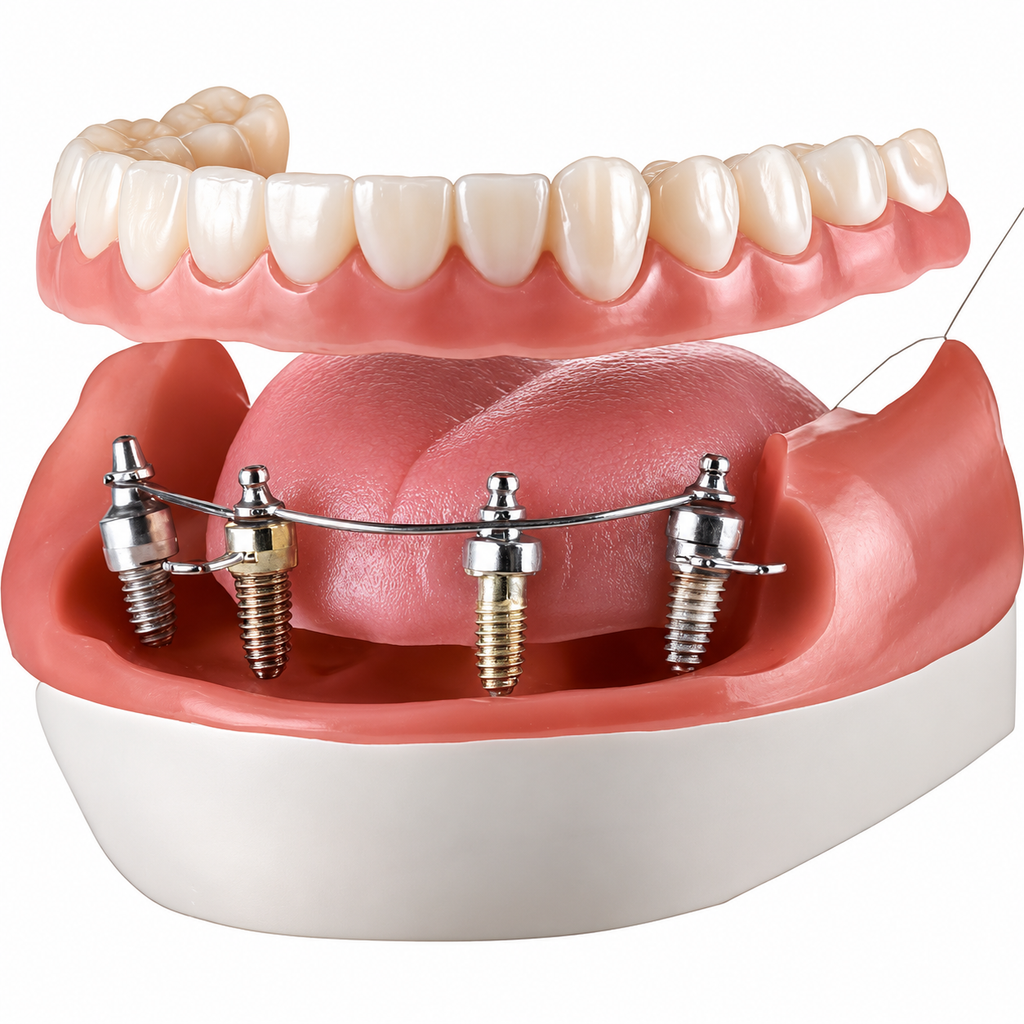
If you have lost most or all the teeth in one jaw, the solution may involve where implants are placed, rather than rebuilding every missing area. With All-on-4 dental implants, four implants support a full fixed bridge, often with the back implants angled to use available bone.
This arrangement can sometimes avoid grafting in selected patients. It does not mean that four implants will always work, and it is not a reason to remove teeth that could be maintained with appropriate care.
For someone missing just one tooth, All-on-4 is not an equivalent alternative to a single implant. We assess full-arch treatment according to the condition of the remaining teeth and the support available in the jaw.
Option 4: Shorter Implants in Selected Cases
Sometimes clinicians consider shorter implants when there is limited bone height but enough width and suitable bone quality. This may reduce the need for a more extensive graft in carefully selected locations.
Short implants require careful planning of the bite and the final crown or bridge. Whether this approach is appropriate must be determined through a professional assessment of the available bone and the planned restoration.
Which Option Matches Your Bone Loss?
These examples show why the same treatment is not recommended for everyone. They are a guide to the discussion, not a diagnosis.
| Where bone is limited | Option that may be discussed |
| Narrow jawbone near a missing tooth | Bone grafting to increase width |
| Little height under an upper back sinus | Sinus lift, sometimes with a graft |
| Many missing teeth across one jaw | All-on-4 using suitable remaining bone |
| Reduced bone height in one implant site | Shorter implant in selected circumstances |
One Operation or Two? How the Timing Changes
The biggest practical difference is whether your implant can be stable on the day of surgery. If it can, a modest graft or certain sinus lift procedures may sometimes be combined with implant placement.
If bone must be rebuilt first, the site usually needs several months to heal before the implant can be inserted. The implant then needs its own healing period before the definitive crown or bridge is fitted.
For patients travelling from Italy, that distinction can change the number of visits to Tirana. We explain the proposed stages in the treatment plan, including when temporary teeth may be possible; a temporary restoration is not the same as a fully healed final implant tooth.
How We Assess Bone Loss at Trio Dental Center
You can start from home by sending us a panoramic X-ray, any existing CBCT scan and a short description of your dental history. Tell us if you have previously had a graft, gum disease treatment or failed implants, because these details affect planning.
Our implant team includes Dr. Elian Dylgjeri, whose work includes bone regeneration and sinus lifts. Your appointment in Tirana includes a clinical examination and 3D assessment before any surgical plan is confirmed.
We also check gum health, smoking, medical conditions and whether the teeth you still have can be preserved. A technically possible implant is not automatically the best choice if untreated disease or other factors could threaten the result.
Frequently Asked Questions
Can I get implants if my teeth have been missing for 20 years?
Possibly. Long-term tooth loss often means some bone has been lost, but the amount varies considerably between people and parts of the jaw. An examination and appropriate imaging are needed before ruling implants in or out.
Does a bone graft have to come from my own body?
No. Depending on the defect, dentists may use processed human donor bone, animal-derived material, synthetic substitutes or your own bone. The surgeon should explain the selected material, its purpose and the alternatives.
What if gum disease caused my bone loss?
Active gum disease should be treated and stabilised before implant surgery. Otherwise, ongoing inflammation may put the tissues supporting the new implants at risk.
Can diabetes stop me from receiving implants?
Diabetes does not automatically rule out implants, but blood sugar control is important for healing and long-term health. Your dentist may ask for a recent HbA1c result and coordinate with your doctor where necessary.
What if implants are not suitable for my jaw?
A removable denture or another prosthetic option may still restore chewing and appearance without the same surgery. We can discuss dentures if an implant-based plan is not appropriate.
🦷 Discover Your Implant Options at Trio Dental Center
Have you been told you do not have enough bone for implants? Contact Trio Dental Center to discuss your X-rays and find out which options deserve a closer look before you plan a visit to Tirana.
- 📧 Email: info@dentaltrio.com
- 📞 Telephone: +355 69 747 4695
- 📍 Location: River Residence, Floor 1, Tiranë 1001, Albania
- 🌐 Contact us: Request an implant consultation


 English
 Shqip
 Italiano
 Français
 Español