
You’re considering a dental implant and are facing two quotes with a significant difference: €1,800 in Italy, €600 in Albania. It’s natural to wonder whether the quality is the same. In this guide, we transparently compare implantology in Albania and Italy in terms of prices, materials, dentist training, guarantees, and real timelines—citing verifiable sources and avoiding generic promises.
Important note: The following information is for informational purposes only and does not replace professional dental advice. Every clinical case is different and requires personalized evaluation.
Price Comparison: Sources and Methodology
The following data represents 2026 market averages derived from public price lists of private clinics in Italy and Albania, as well as industry reports on dental tourism published by Medical Tourism Corporation and European healthcare mobility observatories. Prices may vary depending on case complexity, implant brand, and city.
| Procedure | Italy (avg) | Albania (avg) | Estimated Savings |
|---|---|---|---|
| Single implant + zirconia crown | €1,800–2,500 | €600–900 | ~60–70% |
| All-on-4 (one arch) | €9,000–14,000 | €3,500–5,500 | ~60% |
| All-on-6 (one arch) | €12,000–18,000 | €4,800–7,000 | ~60% |
| Full mouth (two arches) | €22,000–35,000 | €8,500–13,000 | ~60% |
| Sinus lift | €1,200–2,000 | €400–700 | ~65% |
For full-mouth treatments, the difference can exceed €15,000—enough to justify careful evaluation rather than a rushed decision.
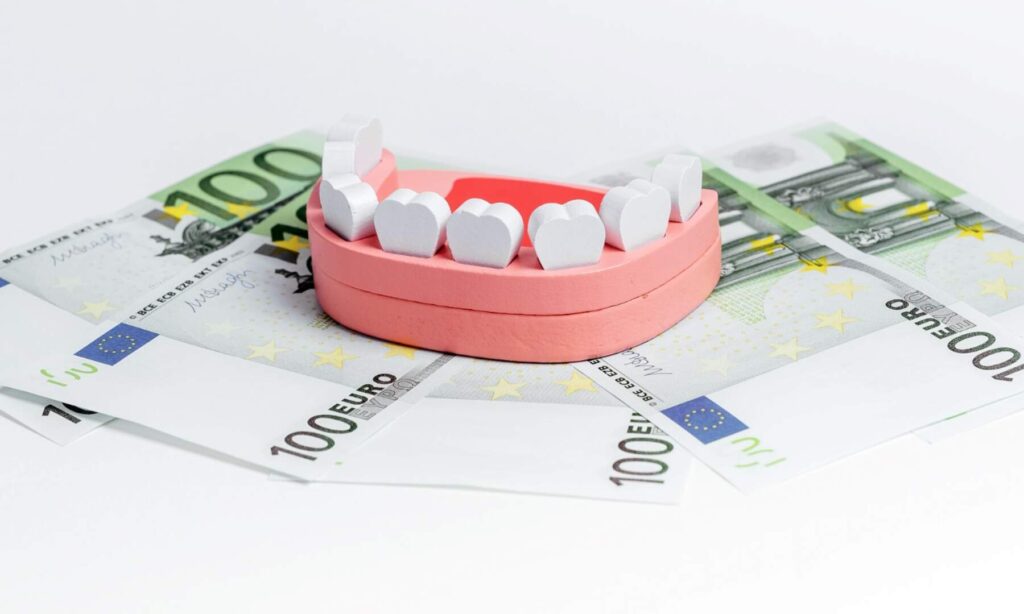
Why It Costs Less in Albania: Objective Factors
The price gap is not marketing—it’s driven by documented economic factors:
- Lower labor costs: salaries for healthcare and technical staff are significantly lower than in Italy
- Lower operating costs: rent, utilities, and administrative expenses in Tirana are typically lower than in Milan or Rome
- Taxation: corporate tax rates are lower in Albania
- High patient volume: many clinics benefit from economies of scale through dental tourism
Important clarification: Materials and implants used in reputable Albanian clinics come from the same manufacturers used in Italy. Companies like Straumann (Switzerland), Nobel Biocare (Sweden), and Megagen (Korea) supply identical CE-certified products to both markets.
Materials and Technology: What to Check
Reputable clinics in Albania typically use:
- CE-certified implants from leading European brands
- Zirconia or lithium disilicate crowns (e.max)
- Intraoral scanners, 3D CBCT imaging, CAD/CAM systems
- Class B sterilization protocols
Warning: Not all clinics operate at the same standard. Before booking, request in writing the exact implant and crown brands, along with an implant passport to be provided at the end of treatment.
Dentist Training: How to Verify Credentials
Dentists in Albania may have different educational backgrounds:
- Graduated in Albania with local training
- Graduated in Albania with specialization in Italy, Germany, or Switzerland
- Albanian dentists trained directly in Italian universities and returned home
Many clinics specializing in Italian patients employ dentists from the latter two categories, often fluent in Italian.
To verify a professional:
- Request their registration number with the Albanian Medical Order (Urdhri i Mjekut)
- Ask for copies of degrees and specializations
- Check public reviews on Google and Trustpilot (not just testimonials on the clinic website)
Professional competence is not determined by country—it must be verified individually.
Guarantees: What the Contract Actually Says
Typical guarantees from reputable clinics (exact duration depends on the contract):
| Type of Guarantee | Italy | Albania (reputable clinics) |
|---|---|---|
| Implants | 5–10 years or lifetime | Lifetime (contractual) |
| Zirconia crowns | 3–5 years | 3–5 years |
| Prosthetics | 1–3 years | 2–5 years |
The key issue is not duration, but what happens in case of failure. An Italian clinic is physically closer. A reputable Albanian clinic covers replacement and often return travel. An unreliable clinic does not respond.
Before signing, verify that the contract clearly states:
- What is covered
- What voids the guarantee (smoking, poor hygiene, trauma, third-party intervention)
- Who pays for repairs and travel
- Legal jurisdiction in case of disputes
Implant Success Rates: What Science Says
According to a 2024 meta-analysis in Clinical Oral Investigations, survival rates for rough-surface titanium screw implants reach 92% at 20 years in prospective studies. A systematic review by Howe et al. (Journal of Dentistry, 2019) reports a 96.4% survival rate at 10 years.
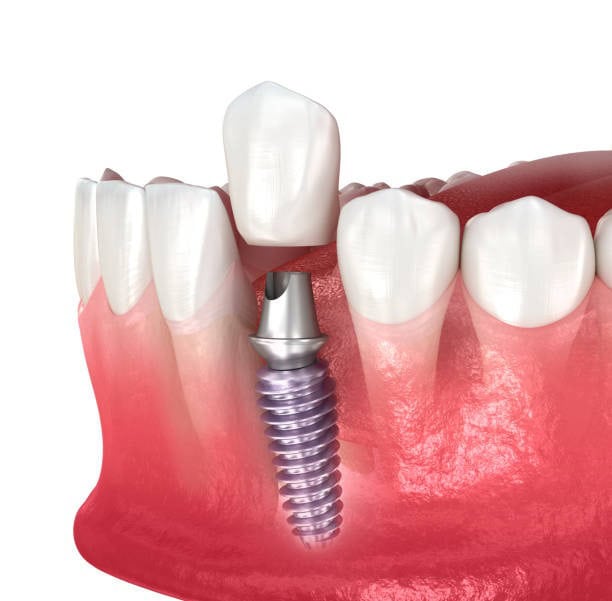
Factors such as age over 65, smoking, diabetes, and hypertension significantly reduce these rates.
Key takeaway: Implant success depends primarily on surgical quality, patient health, and post-operative hygiene—not the country where the procedure is performed.
Treatment Timeline: Realistic Comparison
A traditional implant protocol typically involves two phases with osseointegration in between:
| Phase | Italy | Albania |
|---|---|---|
| Implant surgery | 1–2 days | 3–5 days (one stay) |
| Osseointegration | 3–6 months at home | 3–6 months at home |
| Prosthetic phase | 1–2 days | 4–7 days (second stay) |
| Total duration | 4–7 months | 4–7 months |
The timeline is essentially the same. In Albania, appointments are concentrated into two longer stays rather than spread over multiple visits.
For immediate loading protocols (e.g., All-on-4 with fixed temporary teeth in 24–72 hours), many Albanian clinics have in-house labs for faster turnaround.
When It Makes Sense to Stay in Italy
Italy is generally preferable when:
- The treatment is minor (filling or cleaning)
- There are complex medical conditions (heart disease, ongoing cancer treatment, unstable systemic conditions)
- You cannot take time off for two 4–7 day trips
- The total cost is under €1,500, making travel economically unjustified
Consulting your doctor before traveling is always recommended.

When Albania May Be Worth Considering
Albania may be a good option when:
- The Italian quote exceeds €3,000
- The treatment involves implants, prosthetics, full-mouth rehab, or smile design
- Your clinical condition allows safe travel
- You are willing to organize two trips over 4–6 months
- You find a verifiable clinic with documented credentials and written guarantees
Frequently Asked Questions
Do dental implants in Albania last as long as those in Italy?
Longevity depends on materials, surgery, patient health, and hygiene—not the country. If CE-certified implants (Straumann, Nobel Biocare, Megagen) are used, survival rates match international scientific data.
What if the implant fails while I’m in Italy?
With a reputable clinic, the contractual guarantee covers replacement. Always verify in writing what is included, including return travel if applicable.
Can I do follow-ups with my dentist in Italy?
In most cases yes, for hygiene and routine checks. For technical implant work, coordination with the original clinic is recommended.
Do dentists in Albania speak Italian?
In clinics specialized in Italian patients, often yes. Verify before booking and ask if a specific professional will be assigned.
Can I deduct treatments done in Albania in the 730 form?
According to the Italian Revenue Agency, healthcare expenses abroad are deductible at 19% under the same conditions as in Italy, with a €129.11 threshold and mandatory traceable payment. For specific cases, consult a tax advisor.
Conclusion
Choosing between dental implants in Italy or Albania is not a choice between quality and savings—it’s a choice between two ways of organizing the same treatment. Quality depends on the individual professional, the clinic, and the materials—not the country.
Savings in reputable Albanian clinics are real and measurable—but only with informed decisions, verified credentials, and written guarantees.
If you want a detailed quote to compare with your dentist’s, contact us for a free online consultation. A second opinion is always valuable.
Disclaimer
This article is for informational purposes only and does not replace professional dental advice or tax consultation. Any decision regarding dental treatment should be made after a personalized clinical evaluation. Prices indicated are market averages and subject to change.
Sources
- Howe M-S, Keys W, Richards D. Long-term (10-year) dental implant survival: A systematic review and sensitivity meta-analysis. Journal of Dentistry, 2019.
- Kern JS et al. A 20-year meta-analysis of dental implant survival rates. Clinical Oral Investigations, 2024.
- Italian Revenue Agency – Healthcare expenses, Article 15 TUIR
- Medical Tourism Corporation – Dental Tourism in Albania report 2025–2026

 English
  Shqip
Shqip  Italiano
  Français
  Español