
How many times have you put off a dental appointment because the thought alone made your stomach turn? Maybe it started with one bad experience years ago. Maybe it is the sound of the drill, the feeling of being reclined and unable to move, or simply not knowing what is about to happen inside your mouth. Whatever the trigger, you are far from alone. Research suggests that between 9% and 20% of adults across Europe and North America avoid dental care entirely because of fear — often until a small problem becomes an urgent and far more expensive one.
The good news is that dentistry has changed dramatically. One of the most significant developments for anxious patients is conscious sedation — a safe, well-established technique that allows you to get through dental treatment in a state of deep relaxation without losing consciousness. In this article, we will explain exactly what conscious sedation is, how it works, who it is right for, and why more and more patients are choosing to combine it with a trip to Albania for high-quality, affordable care.
What Dental Anxiety Actually Is (And Why It Is Not a Character Flaw)
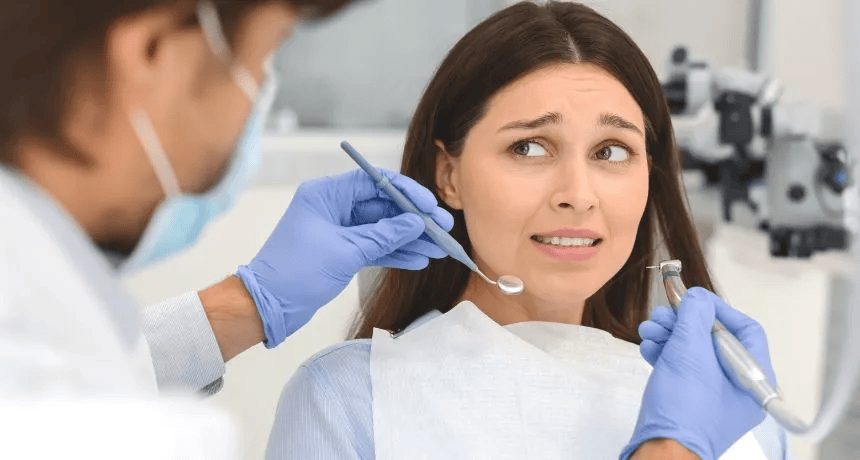
Dental phobia, or dental anxiety, is a genuine psychological response — not an overreaction and not a sign of weakness. It is often rooted in a past painful experience, a feeling of loss of control, or the particular discomfort of having someone working inside your mouth while you are expected to stay still and comply without complaint.
The signs vary from person to person, but the most common ones include:
- Persistent, intrusive thoughts in the days leading up to an appointment
- A racing heart or sweating in the waiting room
- A strong gag reflex or waves of nausea during treatment
- Systematically avoiding dental care, even when you are in pain or know something is wrong
That last point is where dental anxiety becomes a real clinical problem. When fear keeps people away from the dentist, small issues compound steadily over time. A cavity becomes a root canal. A root canal left untreated becomes an extraction. Missing teeth can cause bone loss, shifting alignment, and long-term difficulties with eating and speech.
The cycle of avoidance always costs more — in health terms and in financial terms — than whatever treatment was being avoided in the first place.
What Is Conscious Sedation?
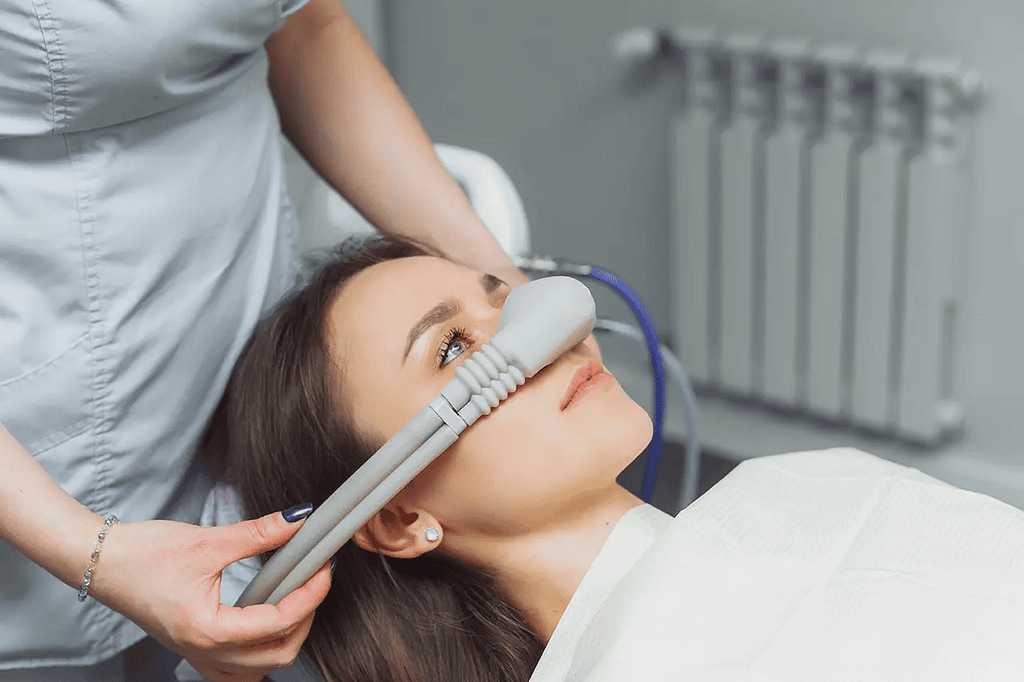
Conscious sedation is a medically supervised technique that puts you into a state of profound physical and mental relaxation during a dental procedure while keeping you awake and able to respond to your dentist. It is not general anaesthesia. You do not lose consciousness. You do not need to be in a hospital operating theatre. And recovery is fast — often measured in minutes rather than hours.
The experience is often described as feeling somewhere between being very drowsy and pleasantly detached from everything happening around you. You can still follow simple instructions — open your mouth, shift position slightly, answer a question — but the anxiety that would normally accompany a dental visit simply disappears. Many patients report that their memory of the appointment afterwards is vague or almost entirely absent. For someone who has spent years dreading dental visits, that alone can feel like a profound change.
How Does It Work in Practice?
There are two main approaches used in modern dental practices, and the right choice depends on the complexity of the procedure and the level of anxiety involved.
Nitrous oxide, commonly known as laughing gas, is the most widely used form of conscious sedation in dentistry. It is delivered through a small, comfortable nasal mask worn throughout the procedure. Within just a few minutes, most patients feel a warm, tingling sensation spreading through their limbs, a lightening of mood, and a steady easing of the tension they walked in with. The gas does not put you to sleep — it simply removes the sharp edges of fear and discomfort. Once the mask is removed at the end of the appointment, the effects clear almost immediately. Many patients are able to drive themselves home afterwards without any issue.
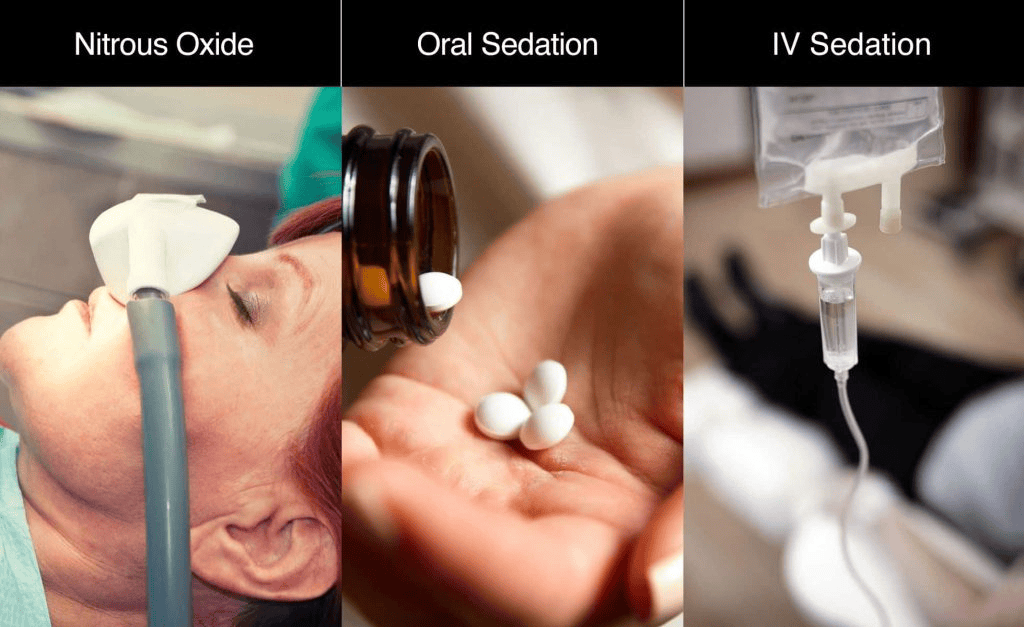
Oral or intravenous sedation uses medications from the benzodiazepine family and is typically reserved for longer, more complex treatments — full-arch implant placements, multiple extractions in a single session, or more extensive oral surgery. The level of sedation achieved is deeper and more sustained. You will be monitored throughout the procedure by the dental team, and you will need to arrange for someone to accompany you back to your accommodation afterwards. Recovery takes a few hours, and most patients feel fully themselves again by the following morning.
In both cases, conscious sedation is not an informal comfort measure — it is a structured clinical protocol with defined safety parameters and monitoring requirements, demanding specific training from the professionals administering it. This is why the quality and experience of the clinic you choose matter considerably.
Who Is Conscious Sedation Right For?
Conscious sedation is not reserved only for patients with extreme, debilitating phobia. It is a clinically appropriate and widely recommended option for anyone who:
- Experiences significant anxiety or panic at the thought of sitting in a dental chair
- Has a pronounced gag reflex that makes treatment difficult or impossible to complete
- Needs several complex procedures and wants to consolidate them into fewer, longer appointments
- Has had a traumatic dental experience in the past that left a lasting emotional association with dental care
- Is elderly or has cognitive or emotional vulnerabilities that make a standard dental environment particularly stressful
It is also especially well suited to patients travelling specifically for dental treatment — people flying in from the UK, Ireland, the US, or further afield. When you have taken time off, booked flights, and planned a trip around your dental care, spending three or four hours comfortably sedated while back-to-back procedures are completed is not just a comfort option. It is a practical, intelligent clinical strategy that makes the most of your time and your journey.
Is It Safe? What the Evidence Says
Yes. Conscious sedation in dentistry is widely recognised as safe when carried out by properly trained professionals in appropriately equipped clinical settings. Both the American Dental Association (ADA) and the European Federation of Periodontology (EFP) acknowledge conscious sedation as an established, evidence-based practice with a long and well-documented clinical history.
Side effects are uncommon and generally mild: slight dizziness immediately after the procedure, transient nausea, or post-appointment drowsiness. With nitrous oxide, patients typically feel completely normal within 30 minutes. With IV sedation, a rest period of a few hours is sensible before returning to any activity requiring concentration.
The most important safety factor is not the sedation method itself — it is choosing a clinic that applies the protocol correctly, monitors the patient carefully, and has the experience and equipment to manage any unlikely complications.
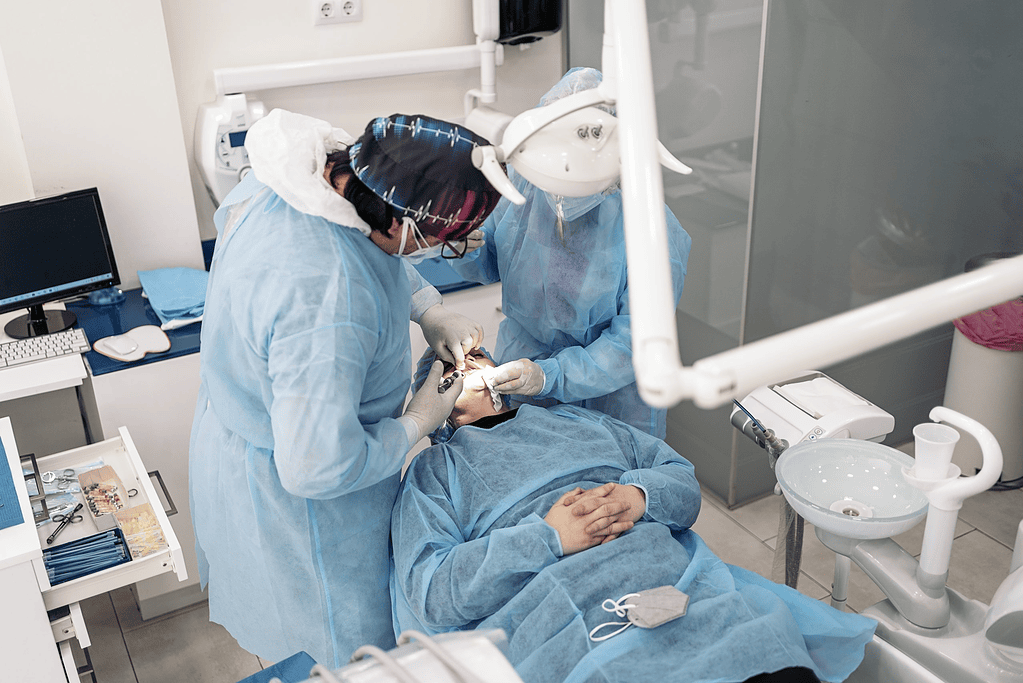
Why Albania — and Why Tirana in Particular?
Over the past decade, Albania has quietly become one of Europe’s most respected and fastest-growing destinations for dental tourism. Tirana is home to a growing number of clinics that invest seriously in contemporary clinical technology — digital radiography, intraoral 3D scanning, CAD/CAM milling for same-day zirconia crowns, Invisalign, and implant systems from leading European manufacturers. Many Albanian dentists have trained or obtained specialist qualifications in Italy, Germany, Austria, or the UK. The standard of care at the top clinics is genuinely comparable to that of any major Western European city.
The cost difference, however, is not comparable — and that is the point. Patients routinely report savings of 40% to 70% on procedures priced at home. A single dental implant that costs between £2,500 and £3,000 in the UK might cost between £800 and £1,200 in Tirana, using the same implant systems, the same materials, and the same clinical protocols.
Tirana is also far more accessible than many people assume. It is approximately a two-hour flight from London, and even less from cities in Central and Southern Europe. Ryanair, British Airways, and several other carriers operate regular routes. The logistics are genuinely straightforward: fly in, attend your appointments over two to four days, rest, and return home with your treatment completed and your savings intact.

What to Expect: Preparing for a Sedated Dental Appointment
Before your appointment, you will have an initial consultation — which many clinics now offer online — to review your medical history, current medications, known allergies, and the most appropriate type of sedation. Be completely open with your dentist during this conversation.
On the day of the procedure, if you are having IV sedation, you will typically be asked to fast for several hours beforehand. Wear comfortable, loose clothing and arrange for someone to accompany you back to your accommodation afterwards.
During the procedure, you will be monitored continuously. Your oxygen levels, heart rate, and breathing will be observed throughout. You remain aware and fully able to communicate if anything feels wrong.
Afterwards, recovery with nitrous oxide is almost immediate. With IV sedation, expect a few hours of drowsiness — plan for a quiet evening. The vast majority of patients feel entirely back to themselves by the following morning.
Dental Trio in Tirana: Care Designed for Patients Who Have Waited Long Enough
If you have been putting off dental treatment for years because of anxiety, need significant work done and want to approach it from a place of calm, or are simply ready to stop letting fear make decisions about your health — Dental Trio in Tirana is a clinic worth knowing about.
The team brings together advanced clinical expertise, modern technology, and a patient-centred approach that takes the concerns of international visitors seriously. Treatment plans are built around your timeline, your comfort level, and your specific goals — not rushed through a generic protocol.
Conclusion: Fear Does Not Have to Be the Reason You Keep Waiting
Dental anxiety is real, and it deserves to be taken seriously. But it does not have to be a permanent barrier to looking after your oral health. Conscious sedation gives people who have struggled with dental fear a practical, medically sound way back to care — without suffering through it, without dread, and without the avoidance that always ends up costing more in the long run.
A simple initial consultation — available online before you commit to anything — is all it takes to understand your options, what treatment would actually involve, and what it would cost compared to what you have been quoted at home.
Book your free consultation today at Trio Dental Center and take the first step toward dental care that does
not have to feel like something to survive.

 English
  Shqip
Shqip  Italiano
  Français
  Español