

Gum surgery may be recommended before restorative or cosmetic dental treatment when the gums are unhealthy, uneven or unable to support the planned result.
It is not required before every crown, veneer or implant. The decision depends on gum health, bone levels, tooth structure and the position of the future restoration.
Why Gum Health Comes First
Crowns, veneers and implants are often associated with tooth shape and appearance. However, the surrounding gum tissue is part of the final result.
Inflamed gums may bleed during scans, impressions or bonding. Swelling can also make the gum line appear different from its stable position.
If restorations are designed while the gums are unhealthy, the margins may become visible after inflammation improves.
The dentist should therefore evaluate and stabilize the gums before completing the final restoration.
Gum Surgery Is Not Always the First Treatment
Bleeding or swollen gums do not automatically mean surgery is required.
Initial treatment may include:
- Professional cleaning
- Deep cleaning below the gum line
- Improved home hygiene
- Treatment of active decay
- Management of plaque-retaining restorations
- Smoking reduction or cessation
- Review of medical risk factors
The gums are then reassessed. Surgery may be considered when non-surgical treatment is not enough or when the planned restoration requires a structural change.
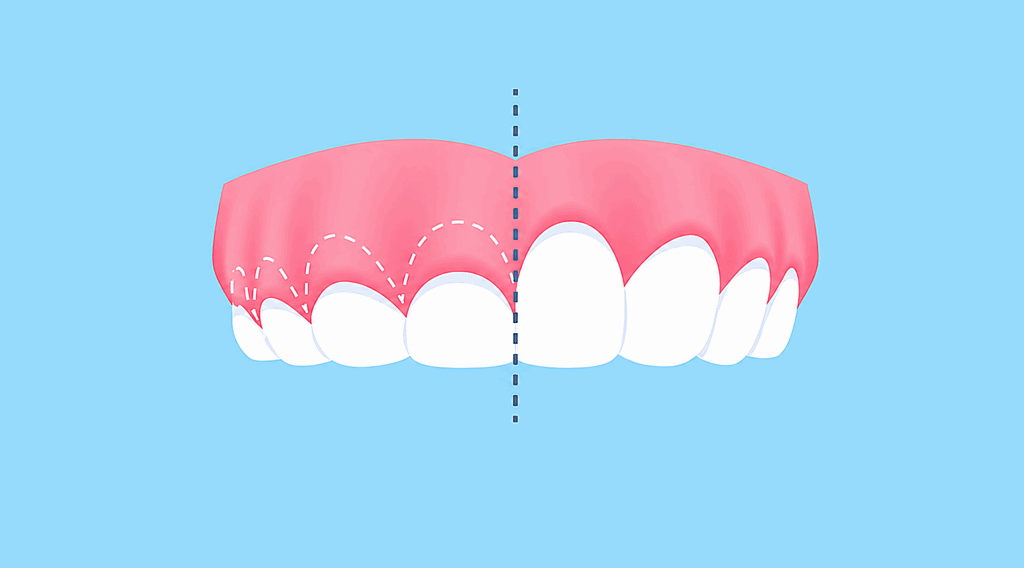
Crown Lengthening Before a Dental Crown
Crown lengthening exposes more of the natural tooth by changing the gum level and, when necessary, reshaping a small amount of supporting bone.
It may be needed when:
- Decay extends below the gum
- A tooth is broken close to the gum line
- There is not enough visible tooth to support a crown
- An old restoration extends too far below the gum
- The crown margin cannot be placed on healthy tooth structure
The procedure can provide the dentist with better access to the damaged area and enough tooth structure for the restoration.
Crown Lengthening for Aesthetic Reasons
Some teeth appear short because they are partly covered by excess gum tissue.
In this situation, aesthetic crown lengthening may reshape the gum line and expose more of the natural crowns of the teeth.
It may be planned before veneers or crowns when:
- The gum line is uneven
- One tooth appears shorter than the matching tooth
- Too much gum is visible while smiling
- The teeth would look too square without gum correction
- The restoration margins would not follow a balanced line
The procedure should not be performed simply to make every tooth look longer. The dentist must consider tooth roots, bone, facial proportions and the patient’s natural smile.
Why Timing Matters Before Veneers
Veneers are designed according to the visible shape of each tooth and the position of the gum.
If gum surgery is completed after the veneers, the edges of the restorations may become exposed or the teeth may appear too long.
When gum reshaping is required, it is normally planned before the final veneers.
The tissues need time to heal and become stable. Producing the veneers too early can reduce the accuracy of the final gum line.
The exact healing period depends on the type and extent of surgery.
Gum Grafting Before Veneers or Crowns
Gum recession occurs when the gum moves away from the tooth and exposes part of the root.
This can create:
- Tooth sensitivity
- Uneven gum levels
- Longer-looking teeth
- Exposed restoration margins
- Difficulty creating a balanced smile
A gum graft may be recommended to cover the exposed root or increase tissue thickness.
The American Academy of Periodontology notes that gum graft surgery may cover exposed roots, reduce further recession and support the appearance of the smile.
Not every area of recession can be fully covered. The expected result depends on bone levels, tooth position and the condition of nearby tissue.
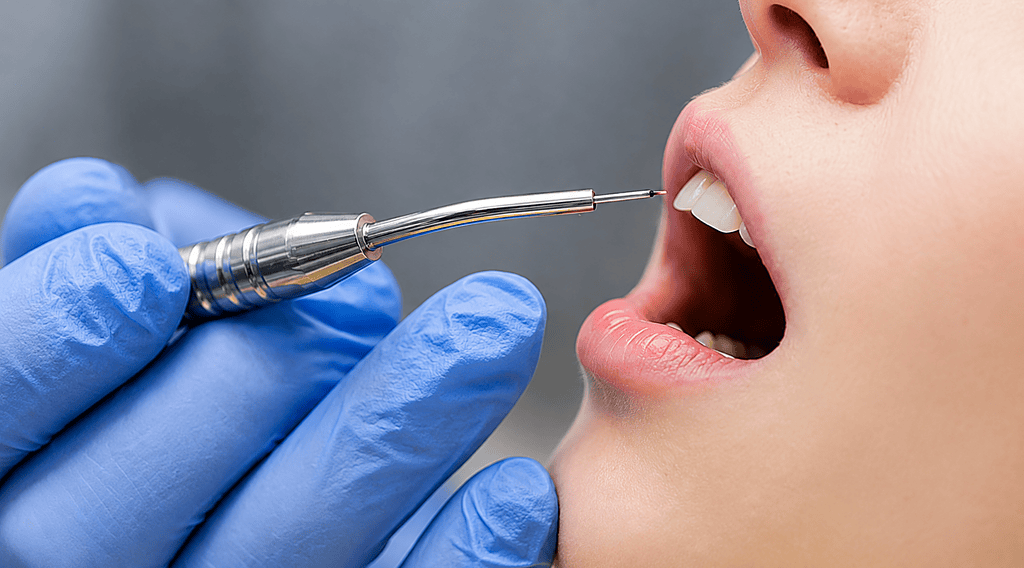
Treating Periodontal Pockets Before Restorations
Periodontal disease can create deep spaces between the teeth and gums.
These pockets allow bacteria to remain below the gum line and can contribute to further tissue and bone loss.
When deep pockets remain after non-surgical treatment, periodontal surgery may be used to improve access for cleaning and reduce areas where bacteria collect.
Final crowns or veneers should usually wait until the disease is controlled. Covering unhealthy teeth with new restorations does not treat the underlying periodontal problem.
Gum Surgery Before Dental Implants
Implants need healthy bone and soft tissue around them.
Several types of gum-related procedures may be considered before or during implant treatment.
Increasing Tissue Thickness
Thin gum tissue may be more likely to recede or show the underlying implant components.
A soft-tissue graft may be used to create a thicker, more stable area around the future implant.
Correcting Gum Recession
When an implant is planned near a visible front tooth, gum position is especially important.
The dentist may recommend soft-tissue treatment to improve the contour before the final implant crown is produced.
Treating Active Gum Disease
Untreated periodontitis should be controlled before implant placement.
Patients who have lost teeth due to gum disease may remain at increased risk around implants. Long-term hygiene and periodontal maintenance are essential.
Restoring a Collapsed Ridge
After tooth loss, the gum and underlying bone can lose volume.
Ridge augmentation may be used to improve the shape of the site before an implant or bridge is created.
Can Crowns or Veneers Correct the Gum Line Without Surgery?
Restorations can change tooth shape, but they cannot safely solve every gum problem.
Making a crown or veneer longer may hide a small visual difference. However, it may also produce a bulky tooth or place the restoration margin too far under the gum.
This can make cleaning more difficult and may contribute to chronic inflammation.
The dentist should decide whether the problem comes from the tooth, gum, bone or a combination.
What Happens During Planning?
The assessment may include:
- Gum measurements
- Photographs
- X-rays
- Evaluation of bone levels
- Tooth-length measurements
- Smile analysis
- Bite assessment
- Review of planned crown or veneer margins
- Implant-position planning
The restorative dentist, implantologist and periodontal clinician may need to coordinate the treatment.
This is particularly important when several front teeth are being changed together.
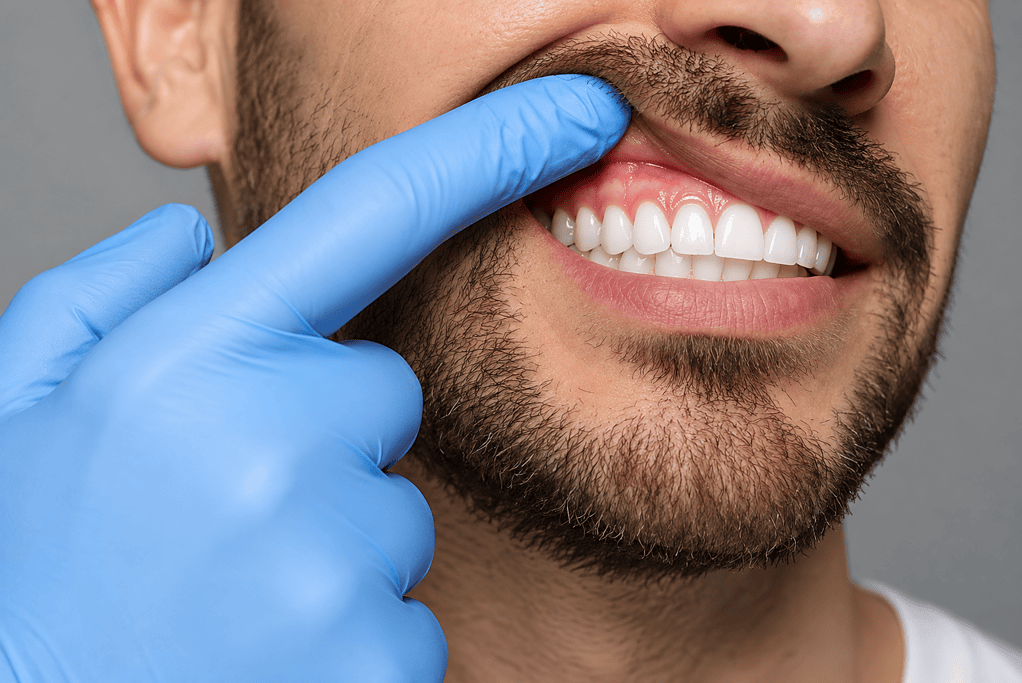
Healing Before the Final Restoration
The gums change during healing.
Temporary restorations may be used while the tissue becomes stable. They can protect the teeth and help shape the gum around the planned result.
Patients must follow cleaning and medication instructions carefully.
Smoking, poor plaque control and uncontrolled medical conditions may delay healing or increase complications.
Questions to Ask Before Gum Surgery
Ask the dental team:
- Why is surgery needed?
- Is there a non-surgical alternative?
- Will gum tissue, bone or both be changed?
- How will it affect the planned restoration?
- How long must I wait before receiving veneers or crowns?
- Will temporary teeth be needed?
- Can the gum position change again?
- How should I clean the area?
- What result can realistically be achieved?
- Who will coordinate the surgical and restorative stages?
The patient should understand the complete plan before irreversible tooth preparation begins.
Prepare the Foundation of Your New Smile
Healthy and stable gums can improve the fit, appearance and maintenance of crowns, veneers and dental implants.
🌿 Ask Trio Dental for an assessment of your gums before starting cosmetic or restorative treatment.
🦷 Send photographs and a panoramic X-ray for an initial case review.
📋 Receive a coordinated plan for gum treatment, implants and final restorations when necessary.
📞 Call or WhatsApp: +355 69 747 4695
📧 Email: info@dentaltrio.com


 English
  Shqip
Shqip  Italiano
  Français
  Español