

Dentures are designed to restore missing teeth, improve chewing, and help you feel more confident when speaking and smiling. However, even a denture that fitted perfectly when it was made may no longer fit the same way several years later.
Your gums and jawbone continue to change, while the denture itself can gradually wear down. Knowing the signs that old dentures need replacing can help you avoid discomfort and maintain better oral function.
How Long Do Dentures Last?
There is no exact replacement date that applies to every patient because dentures and mouths change differently. However, dentures are not permanent restorations and should be checked regularly, especially once they have been worn for several years.
A denture may need adjustment, relining, or complete replacement depending on its fit and condition. You can learn more about dental prosthesis at Trio Dental Center and the different options for replacing missing teeth.
1. Your Dentures Have Become Loose
Dentures should remain reasonably stable when you speak and eat. If they begin slipping, lifting, or moving around the mouth, the shape of your gums and jaw may have changed since they were made.
Small changes can sometimes be managed with an adjustment or reline. When the mismatch becomes significant, making a new denture may provide better stability and comfort.
2. You Have Sore Spots or Gum Irritation
An old denture that no longer fits correctly can place excessive pressure on certain areas of the gums. This may lead to recurring soreness, redness, irritation, or small ulcers underneath the denture.
Do not assume that painful gums are simply part of wearing dentures. If the same areas repeatedly become sore, your dentist should check both the denture and the tissues underneath it.

3. You Need More Denture Adhesive Than Before
Denture adhesive can provide additional confidence for some patients, but it should not be used to compensate for a severely loose denture. If you suddenly need significantly more adhesive just to keep your dentures in place, their fit should be evaluated.
Using increasing amounts of adhesive may temporarily hide the problem without correcting it. A reline, new denture, or another tooth replacement option may provide a more reliable solution.
4. Eating or Speaking Has Become More Difficult
A denture should help you chew rather than make eating a daily challenge. If foods that were previously manageable have become difficult to chew, the denture teeth may be worn or the denture may no longer remain stable under pressure.
Changes in speech can also appear when dentures move or no longer sit in the correct position. Clicking while talking, difficulty pronouncing certain sounds, or repeatedly repositioning the denture with your tongue are all reasons to schedule an examination.
5. The Denture Is Cracked, Worn, Stained, or Missing Teeth
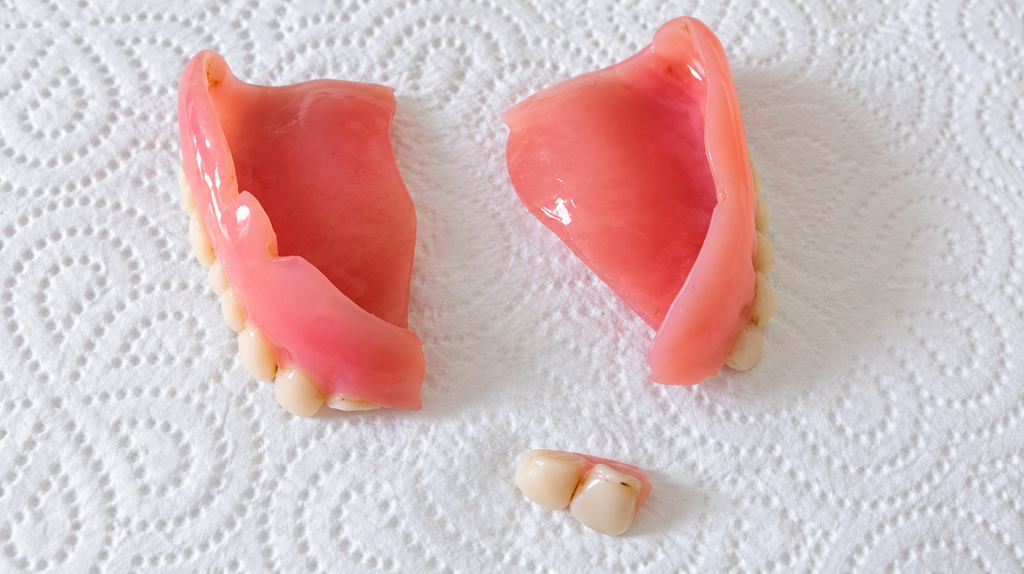
Dentures experience thousands of chewing cycles, so the artificial teeth and base can gradually deteriorate. Cracks, worn biting surfaces, broken sections, persistent discoloration, or missing artificial teeth should not be ignored.
A minor defect can sometimes be repaired, but extensively worn dentures may require replacement. Continuing to use a damaged denture can affect both comfort and how your upper and lower teeth meet.
6. Your Bite or Facial Appearance Has Changed
Dentures do more than replace visible teeth because they also help maintain the position of the jaws and support the lips and cheeks. As the denture wears and the underlying jaw changes, the lower part of the face may begin to look different.
You may notice that your bite feels lower, your mouth appears more collapsed, or your jaw no longer closes as comfortably as before. A new denture can be designed around your current oral anatomy rather than the shape of your mouth many years ago.
7. Your Dentures Are Several Years Old
Even dentures that still look acceptable can gradually lose their original fit. Changes in the gums and jawbone happen slowly, which means patients sometimes adapt without noticing how much the denture has changed.
Older dentures should therefore be examined rather than waiting until they become painful or break. Your dentist can determine whether they are still functioning correctly or whether adjustment, relining, or replacement would be better.
Do Old Dentures Always Need to Be Completely Replaced?
Not always. The best solution depends on whether the main problem comes from the denture base, the artificial teeth, your gums, or changes in the jaw.
| Opsion | When It May Be Considered |
| Adjustment | Small areas are causing pressure or discomfort |
| Reline | The denture is in good condition but has become loose |
| Riparimi | A limited crack or damaged component can be restored |
| Replacement | The denture is significantly worn, damaged, unstable, or no longer fits correctly |
| Implantet dentare | The patient wants greater stability or a fixed alternative |
A dental examination is important before deciding which option is appropriate. Simply repairing an old denture repeatedly may not solve the underlying problem if its overall fit and bite have already changed.
Should You Replace Old Dentures With New Dentures or Dental Implants?
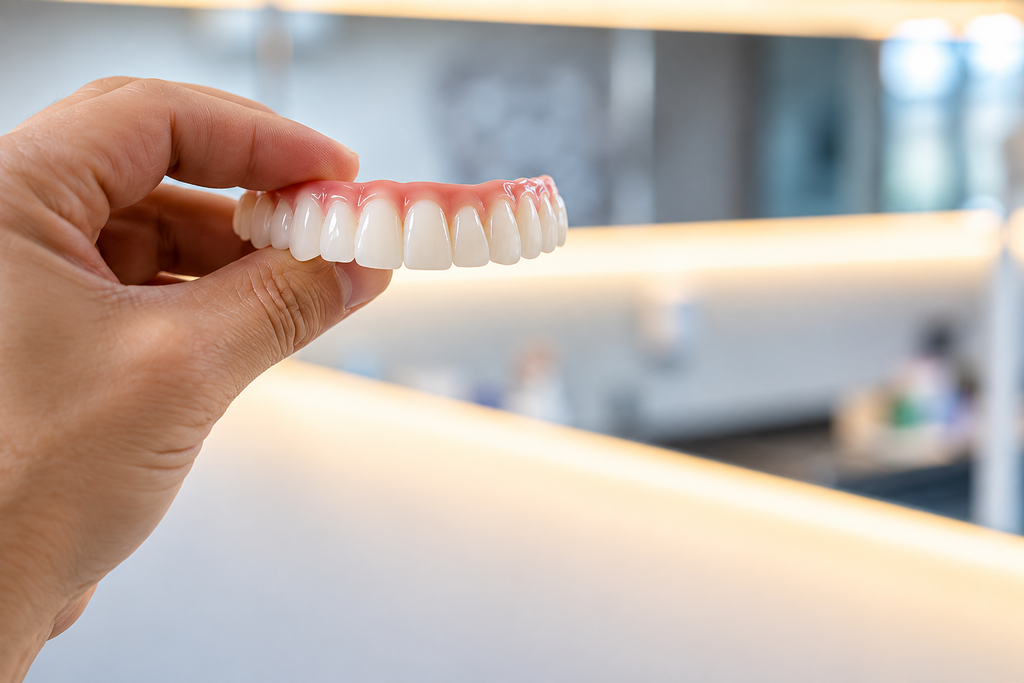
A new removable denture can be an effective solution when the patient is comfortable with removable teeth. Modern dentures can be redesigned to improve fit, appearance, bite, and support according to the current shape of the mouth.
For patients frustrated by denture movement, implantet dentare may provide another option. Implants can be used to improve denture stability or support fixed teeth, depending on the amount of available bone and the patient’s individual case.
Patients missing most or all of their teeth may also be candidates for full-arch treatments. Solutions such as Implante dentare gjithëpërfshirëse use strategically positioned implants to support a complete arch rather than relying on a traditional removable denture.
What Happens When Old Dentures Are Replaced?
Replacing dentures begins with examining your mouth rather than simply copying the old prosthesis. The dentist needs to assess the gums, jawbone, bite, remaining teeth, and the condition of your existing denture.
A new treatment plan may involve:
- Examining the gums and remaining teeth
- Checking how the upper and lower jaws meet
- Taking new impressions or digital records
- Selecting tooth shape, size, and shade
- Testing the position of the new teeth
- Adjusting the final denture for comfort and stability
If you are interested in moving from removable dentures to fixed teeth, additional imaging may be needed to evaluate the available bone. Trio Dental Center can then determine whether a new removable prosthesis or an implant-supported solution is more suitable.
Old Dentures and Dental Treatment at Trio Dental Center
At Trio Dental Center in Tirana, patients with old or uncomfortable dentures can be evaluated for both removable and fixed tooth replacement options. The clinic provides trajtime protetike dentare as well as implant solutions for patients looking for greater stability.
International patients can also begin their evaluation before travelling by sharing recent dental information and X-rays when available. This makes it possible to discuss potential treatment options before organizing a dental trip to Albania.
Pyetjet e Bëra Më Shpesh
Can Loose Dentures Be Tightened?
Sometimes a denture can be adjusted or relined if it is otherwise in good condition. If it is very old, worn, damaged, or significantly different from the current shape of your mouth, replacement may be more appropriate.
Should Dentures Hurt My Gums?
Dentures may require a short adaptation period when they are new, but persistent pain should not be considered normal. Recurring sore spots or ulcers should be checked by a dentist.
Can I Keep Using Denture Adhesive Instead of Replacing My Dentures?
Adhesive can help with retention, but increasing dependence on it may indicate that the denture no longer fits properly. A dental examination can determine whether adjustment, relining, or replacement is needed.
Can Dental Implants Replace My Removable Dentures?
For many patients, yes, although suitability depends on bone availability, oral health, medical history, and other factors. You can also read about how many implants may be needed to replace all missing teeth.
Are Your Old Dentures No Longer Comfortable? 🦷
Loose, painful, or worn dentures should not simply become something you learn to live with. At Trio Dental Center, your current dentures and oral condition can be evaluated to determine whether you need an adjustment, a new prosthesis, or a fixed implant-supported alternative.
📸 Send your panoramic X-ray or dental information
🦷 Have your old dentures and remaining teeth evaluated
✨ Explore removable and fixed tooth replacement options
✈️ Plan your dental treatment in Tirana before travelling
💬 Ask whether dental implants could offer greater stability
📲 WhatsApp: +355 69 747 4695
✉️ Email: info@dentaltrio.com
📍 Trio Dental Center – Tirana, Albania
If your dentures no longer feel like they belong in your mouth, it may be time to find a solution designed for the mouth you have today.
 English
  Shqip
Shqip  Italiano
  Français
  Español